Posts Tagged With: Poland

70th anniversary of Gibraltar aircrash

I have such a backlog that I guess I’ll have to take a few days off to catch up. I’ll say a few words today about the banquet at the Embassy on the occasion of the 70th anniversary of the death of General Sikorski (04/07/1943). I had a little dilemma, what to wear, especially that due to the impending departure I wanted to wear out my clothes and decided not to buy new, but I had to look presentable so I bought new shoes and a suit jacket 🙂

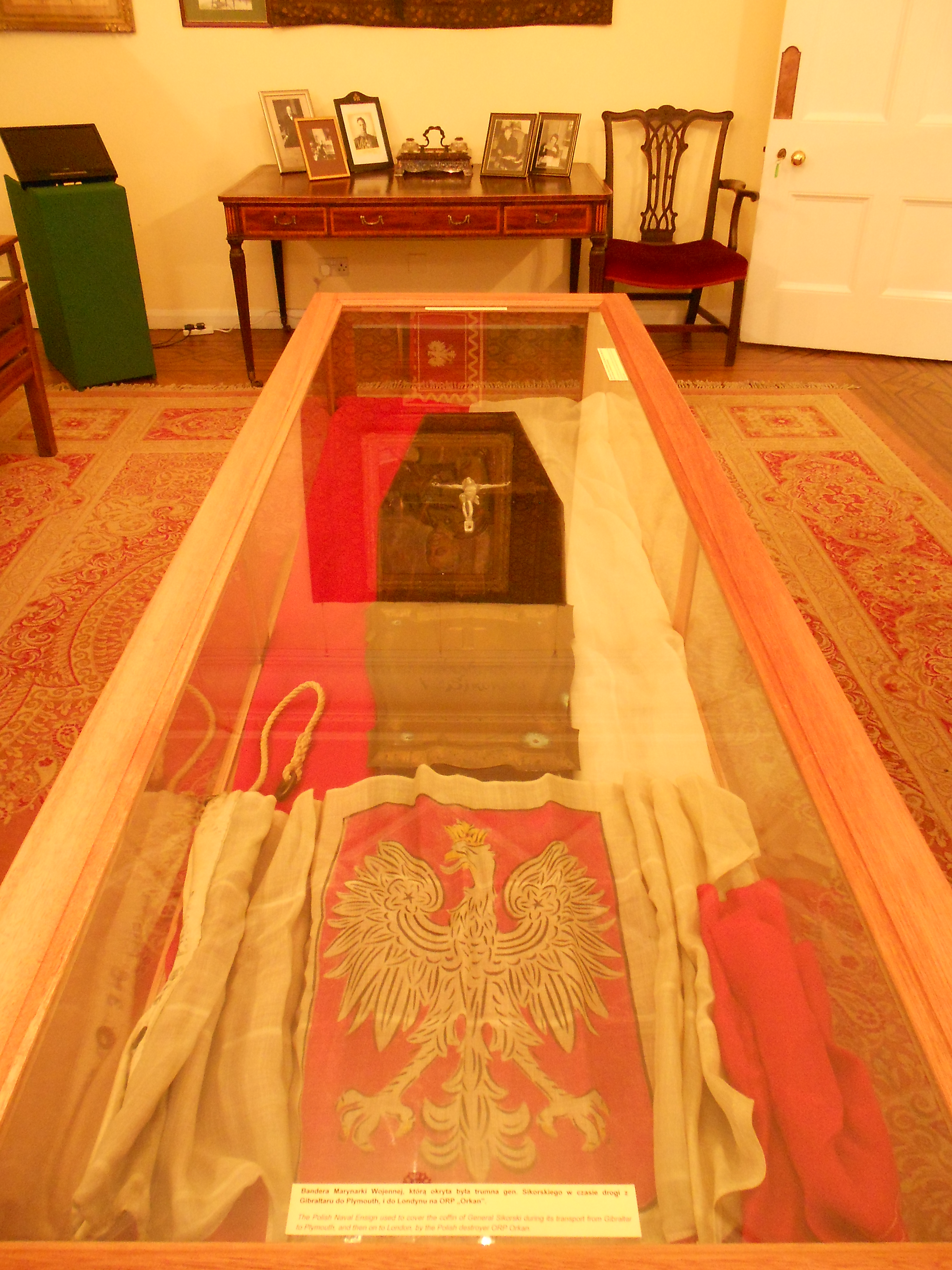
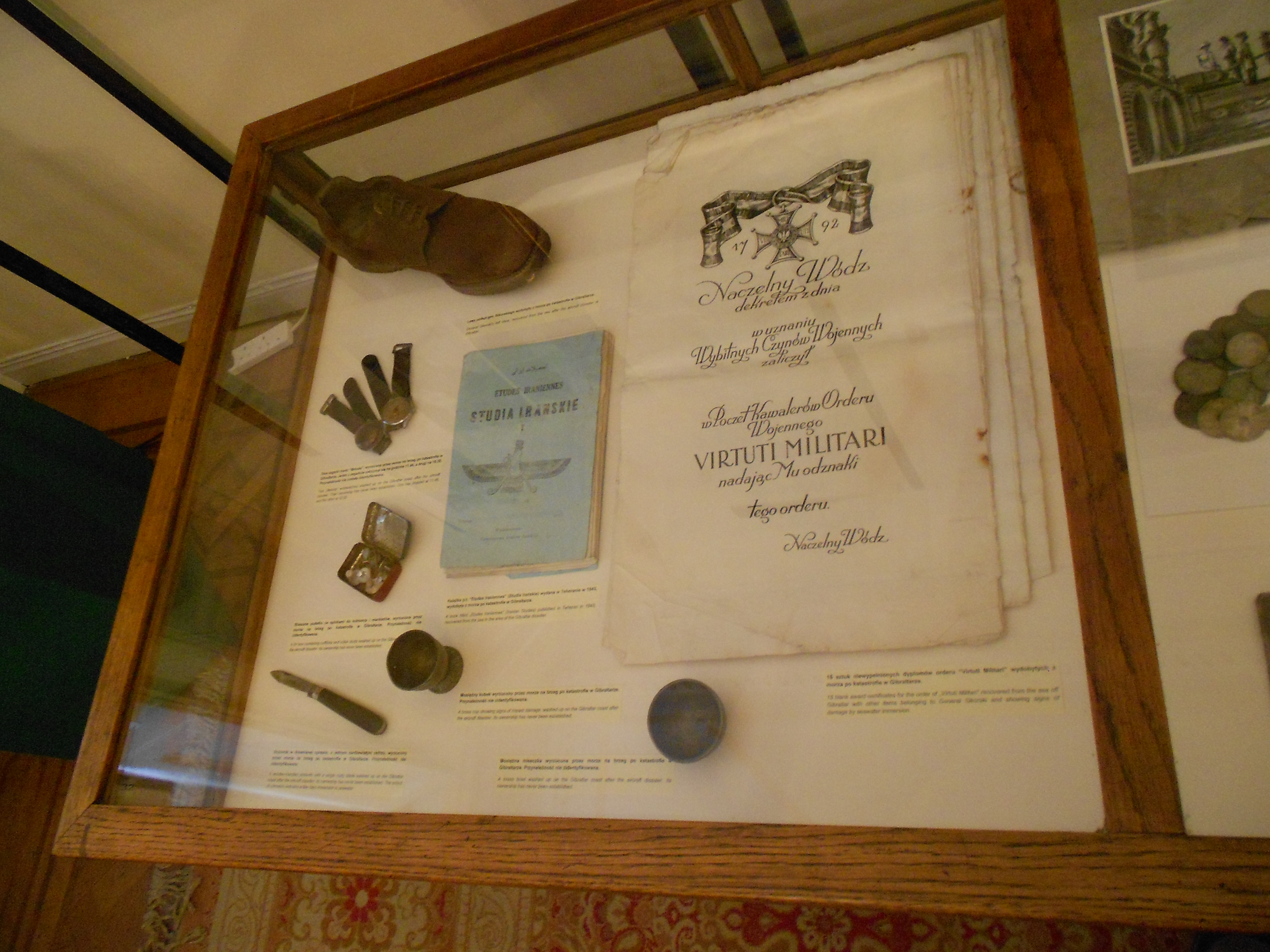
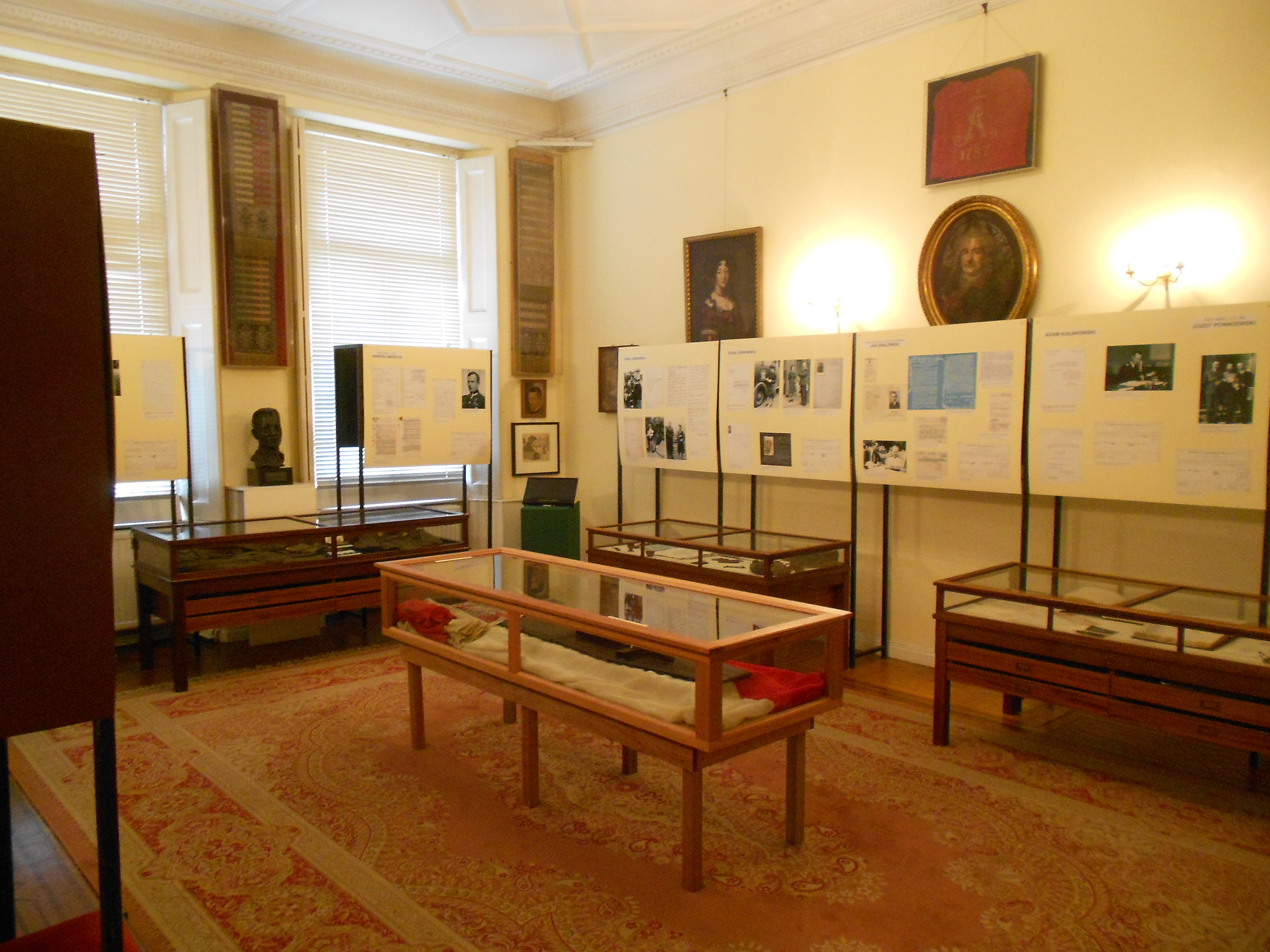
The event consisted of several parts, including a series of lectures, of which the one from Mr Andrew Suchcitz’s I found the most interesting. It was about the documents which have been extracted from the wreckage after the crash of Gibraltar. These documents can be seen on the temporary exhibition at the Museum of Sikorski. I am inviting you because they are not available for the viewing on a daily basis. Below you’ll find a few photos taken a couple of weeks ago at the Museum.

In addition to the lectures I had the pleasure to listen to a concert performed by Simon Komasa (baritone) and Julia Samojło (piano). The program included songs from the repertoire of Paderewski, Karłowicz, Chopin and Moniuszko. At the end an extra-curricular performance of Red Poppies on Monte Cassino  touched many of the participants, including the writer’s humble person.

There were a few people present from the Sikorski Museum, including two young (read at my age) guides, who come only on Saturdays, so I did not have the pleasure to meet them before. In addition, a group of veterans was present, including some veterans of the Polish 2nd Corps.

Next, it was time for something for the body – good food and a glass of wine. I had a good time during a very interesting talk with Mr. Waclaw, head of the guides, who, using a “conspiracy” whisper explained to me what the most important persons are with a related gossip 🙂

Overall, I felt very honored to be invited and I felt that I am doing something good by volunteering at the museum and writing this blog. I hope you, my dear readers take pleasure in reading this blog. I’m going to write some entries from Lithuania pretty soon, because something about Morocco would have to be written as well, and in September I’m going to Poland, where it is always a lot going on 🙂

Exposition

Exposition

The lid of the coffin used to transport General's body from Gibraltar to England; the Polish Naval Ensign used to cover the coffin and Polish National flag that covered the coffin during the funeral.

The lid of the coffin used to transport General’s body from Gibraltar to England; the Polish Naval Ensign used to cover the coffin during its transport and Polish National flag that covered the coffin during the funeral.

A silver cigarette case with General Sikorski's signature

A silver cigarette case with General Sikorski’s signature

Objects extracted from the wreck, including General's shoe and blank Virtuti Militari certificates

Objects extracted from the wreck, including General’s shoe and blank Virtuti Militari certificates

Hotel bill from Egypt

Hotel bill from Egypt

Categories: Misc | Tags: , , , , , , | 2 Comments

About cats…

Time for first impressions of Lithuania. I’m in Kaunas at my Couchsurfing host’s and slowly getting ready for a Friday night 🙂 Today I’ll slightly go a little off the blog’s topic and say a few words of the local fauna. During a visit at Mrs. Halina Jotkiałło’s house in Vilnius (description of the visit coming soon) I met her four flatmates. Vilnius cats that understand only Polish (because they come from a very good Polish home 🙂 )

I do not know whether you have among your friends people who do photograph every cat they see on the street? I was never one of those people, but somehow, I was captivated by these cats. They very quickly got familiar with me, which means, according to Ms Halina, I’m a good man 🙂 Oh, one more thing, Ms Halina is not an old maid (which the number of cats would indicate 🙂 )

When I read those words before publication, I can not refrain from pronouncing them with Vilnius accent 😀

Here is a collection of Vilnius cats (all cats sheltered by Ms Halina):

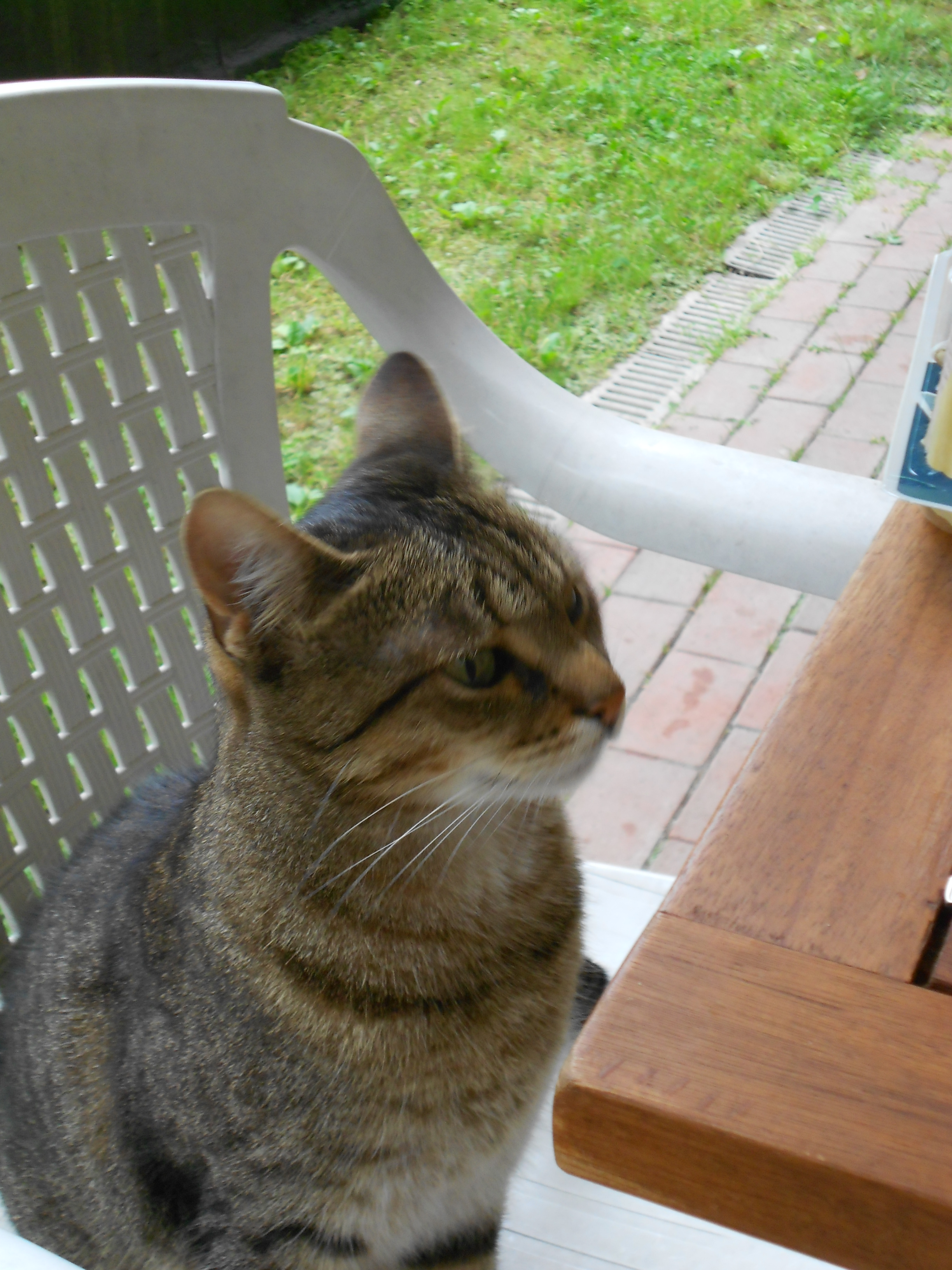
Agata - very sociable, and within five minutes she was sitting on my knees

Agata – very sociable, and within five minutes she was sitting on my knees

13 years old Elza - she was embarrassed because she happened to pee at home :)

13 years old Elza – she was embarrassed because she happened to pee at home 🙂

Seweryn - every now and then disappeared somewhere - Ms Halina thought he was having naps somewhere but I think he was seeing a girl :)

Seweryn – every now and then disappeared somewhere – Ms Halina thought he was having naps somewhere but I think he was seeing a girl 🙂

Kasia - very timid and does not have a tail but stump. That's how she was found - people are asking what kind of race is that with such a short tail :)

Kasia – very timid and does not have a tail but stump. That’s how she was found – people are asking what kind of race is that with such a short tail 🙂

Categories: Misc, RTW trip | Tags: , , , , , | 2 Comments

“George”

It often amazes me,  how long live people who went through the hell of the Second World War, seems like the horrors they had seen during the war, gave them the will to live. I met at the Sikorski Institute several 90-year-olds, Jan Nowak-Jezioranski lived 91 years, General Maczek 102 years, and Jan Karski “only” 86 years 🙂 Probably of great importance is the fact that they grew up in a much healthier environment. The air was cleaner, healthier food – not many of us will reach 90, I’m afraid.

The hero of today’s post lived 78 years, but it seems to me that he had a very successful life. But from the beginning…

Richard Białous - "George"

Richard Białous – “George”

Richard Mieczyslaw Białous (“George”, “Ram”) was born on April 4, 1914 in Warsaw (still in the Russian Empire). From the age of ten belonged to the Gen. Henryk Dabrowski’s Sixth Scout Team, where he went through all the stages from a youngster and from 1936 he served as commander of Troop “Powiśle”. He graduated from St. Stanislaus’s grammar school where he earned a matriculation certificate in 1932. He entered the Faculty of Mathematics and Natural Sciences at the University of Warsaw and a year later he moved on Architecture at the Warsaw University of Technology. In 1936 he obtained with good results an engineering degree. A year later he interrupted his studies and was appointed to the Engineers Training Centre in Modlin and in 1938 finished in second place the School Reserve Officers Engineers, with the rank of platoon sergeant of engineers. He went back to school, but already in March 1939 was called to active duty as an engineer in 8th Infantry Division in Modlin. In June he resigned at his own request, to obtain a discharge from the Warsaw Polytechnic and marry Christine Błońska. It wasn’t given to him to enjoy his wife for a long time, because on 1st August he returned to the 8th Infantry Division as an engineers platoon commander. In September 1939 using delaying action arrived with his unit in Warsaw, where he took part in the defense of Warsaw. On 19th September was wounded in both legs.

After recovering, he was involved in underground activities with Union of Retaliation (Zwiazek Odwetu), a separate body of Union of Armed Struggle (Zwiazek Walki Zbrojnej). In the autumn of 1942 after Shock Troops and Kedyw (“Directorate for Subversion”) were created he became commander of a 300-people strong Special Unit “George”. His deputy was Tadeusz “Sophy” (Zoska) Zawadzki, commander of “Attack” group in Operation Arsenal, who was killed later on in the attack on the Grenzschutz’s watchtower and in his honor the battalion was called “Sophy” (01/09/1943).

"Sophy" Battalion Badge

“Sophy” Battalion Badge

During the Warsaw Uprising Battalion “Sophy” as part of the Sabotage Brigade “Beard 53” has passed the toughest trail of fighting in the Wola district, Old Town and Czerniaków. After Czerniaków’s fall “Sophy’s” soldiers (“zośkowcy”) infiltrated channels to Mokotów, and after the surrender of the district – to the city center.” George” with a small group of soldiers moved terrestrially to the Downtown South. The battalion lost about 350 soldiers during the Uprising. For his actions “George” was awarded three times the Cross of Valour and the War Order of Virtuti Militari fifth class.

Richard Białous in 1st Independent Parachute Brigade

Richard Białous in 1st Independent Parachute Brigade

After the Uprising he was sent to prison camps in the Bergen-Belsen, Gross-Born and Sandbostel. After his release he became the commander of the First Care Platoon at the Independent Parachute Brigade, he organized  Officer’s Club and a school for soldiers. He decided to stay in the West, after hearing how the Russians treat Home Army soldiers. He returned to Poland in 1946 together with the gifts’ transport and with the same convoy he exported from the country his wife and children and several comrades in arms. In 1947 he lived in London, but he was annoyed by the exalted British attitude towards Poles. At the urging of a friend he decided to move to Argentina.

Registration Card

Registration Card

On 9th July 1948 he landed in Buenos Aires, which under General Peron was the scene of strikes and street fighting. This was the reason for the move with his family to the west, to the town of Quillen in the province of Neuquen. Together with a friend from the Independent Parachute Brigade he had launched a house factory, which soon went bust. Undeterred by the failure he had used his knowledge and experience in the construction of roads and bridges. He designed and supervised the construction of the airport in Quillen. In 1961 they moved to the town Zapala to allow their children access to education. Two years later he got the government contract to design and build a resort in Caviahue, near the border with Chile. He was technical director of the Board of Tourism and Resorts, then Director of the Hydrological Service and Electricity. He was completely responsible for water supply, production and distribution of electricity. In the years 1966-1969 he was the director of projects on behalf of province of Neuquen’s Ministry of Construction. As the director of “Adelphia” over the next two years he built an electricity transmission line, the road in the mountains, the pipeline. Since 1976 he also was appointed director of the thermal spas. He was active in the Union of Poles in Argentina and in veterans’ organizations. In Patagonia he founded the first in Argentina biathlon club. He was an active skier and mountaineer. He climbed in the Andes, capturing several virgin peaks. He visited Poland only once for the 30th anniversary of the outbreak of the Uprising. During this visit he visited his family, places where battalion “Sophy” fought and the graves of friends.

A resort in Caviahue

A resort in Caviahue

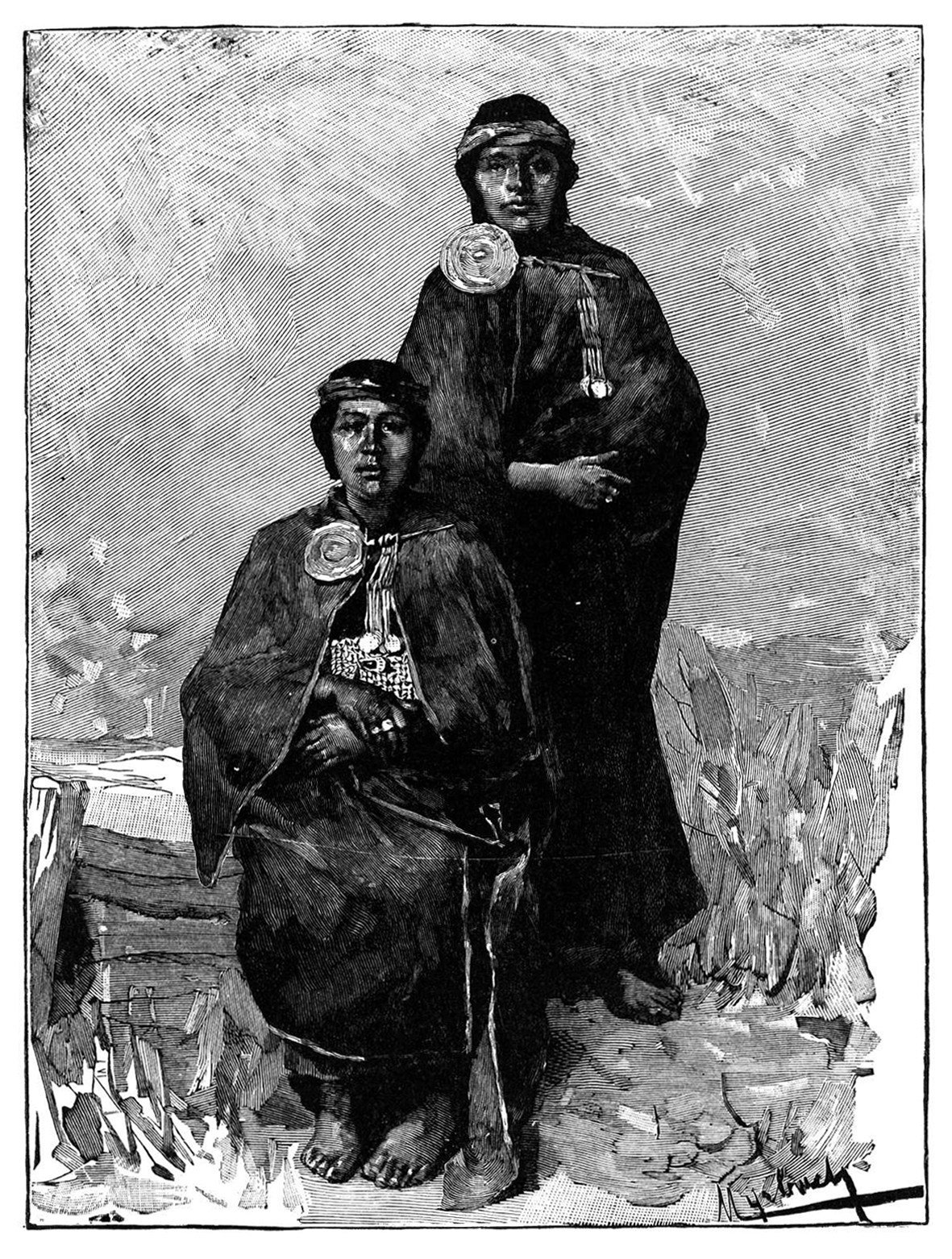
He died on 24th March 1992 and was buried in the cemetery in Neuquen. I will try to find his grave when I’m in Argentina. Although he wasn’t exiled as Bronislaw Pilsudski but Richard Białous also turned to anthropology (beautiful continuation of nineteenth-century Polish academic traditions). He moved with his family on land belonging to the tribe of Araucanians (they call themselves Mapuche – People of the Earth). Białous was the founder of the Araucanian Society. He studied their customs, language, and traditions and had become an expert on Mapuche culture and had a large collection of artifacts. I think he was impressed by the fact that the Mapuche were not conquered neither by the Incas nor by the Spanish and only Chilean troops managed to do that. Maybe their resilience reminded him of citizens of Warsaw?

The Mapuche tribe

The Mapuche tribe

Bibliography:

Davies, Norman. Rising ’44: The Battle for Warsaw, London, Macmillan, 2003.

Utracka, Katarzyna. Poległym chwała, wolność żywym. Oddziały Walczącej Warszawy, Warszawa 2005

http://www.1944.pl/historia/powstancze-biogramy/Ryszard_Bialous

http://histmag.org/Ryszard-Bialous-ps.-Jerzy-2851

Categories: Vitae | Tags: , , , , , , , , , , , , , | Leave a comment

We remember

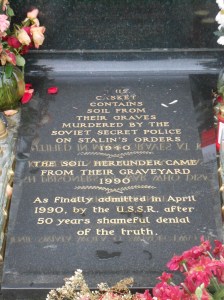
I’ve been planning to visit the Gunnersbury Cemetery for a long time and finally I did it. The funniest thing is I used to work in Chiswick, 15 minutes walk from the cemetery but never could find time. It was a rainy Thursday afternoon when I got there and I guess that was the reason for only a few visitors apart from me. The main purpose of my visit was Katyn Memorial at the centre of the cemetery. The Memorial is thought to be the first one to be erected in Western Europe (unveiled on 18 September 1976) but the first place to commemorate the Katyn Massacre was the Church of Divine Mercy in Manchester where in 1964 an urn with soil from Katyn and a cross made of a monastery’s wall in Kozielsk appeared. Three years later a plaque was unveiled at St Andrew Bobola Church in London and on 16 November 1975 a Katyn Memorial was unveiled in Stockholm.

The idea of Katyn Memorial faced a lot of opposition in the UK. Moscow and Warsaw were protesting and there was no support from the British Government but despite all that Polish Government-in-exile secured the support of a few British politicians like Winston Churchill, grandson of Sir Winston Churchill. Around 8000 people attended the ceremony on 18 September 1976, including delegations from few embassies. However there was no Western European delegation, the British PM also failed to show up. Who would’ve thought that even 30 years after the WWII Brits would have no balls to oppose the Soviets (a New Year’s resolution – I’ll try to choose words more carefully 🙂 ).

Katyn Memorial

Katyn Memorial

DSCN1957

DSCN1958

Walking towards the Memorial I started noticing a lot of Polish names. I slowed down and started reading the names. I guess at least 20% of people resting there were Polish. Suddenly I realized almost every tombstone had an emblem of Polish Eagle or Poland Fights On. Sometimes it would only say: “Born in Lviv”.

Zygmunt Witymir Bienkowski - 303 Squadron Commander (01.12.1942-04.07.1943)

Zygmunt Witymir Bienkowski – 303 Squadron Commander (01.12.1942-04.07.1943)

General Malinowski fought in Polish Legions and then under Gen Haller.

General Malinowski fought in Polish Legions and then under Gen Haller

Zbigniew Stypulkowski - one of the defendants in the Trial of the Sixteen

Zbigniew Stypulkowski – one of the defendants in the Trial of the Sixteen

Kamil Bogumil Czarnecki - one of General Maczek's officers

Kamil Bogumil Czarnecki – one of General Maczek’s officers

Poland Fights On

Poland Fights On

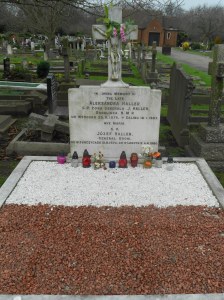
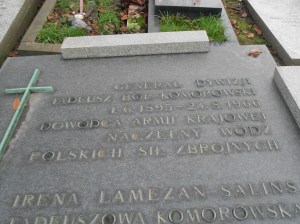
At the Memorial I had a chat with a Polish woman who belonged to Solidarity and arrived in the UK more than 30 years ago. I’m sure I’ve mentioned before that post-war and new wave of Polish immigrants are not very well connected. Well, there’s a similar situation when it’s about post-Solidarity immigration. I didn’t want to listen to the accusations against the post-war immigration so I quickly asked her to show me the way to some graves. It really takes a war for us, Poles to stop barking at each other… But thanks to her I got a name of a Polish priest who’s involved in taking care of Polish graves in London. She also saved me some time by showing me graves of the second to last Polish President in Exile Kazimierz (Casimir) Sabbat and general Józef (Joseph) Haller who in 1920 seized Pomerania and performed a symbolic “wedding ceremony” of Poland and the Baltic Sea (as the woman described him – “the one who married the sea” 😀 ). She failed to show me the grave of general Bór-Komorowski, the Home Army’s commander – a coincidence? I hope so 🙂

Kazimierz (Casimir) Sabbat - the second to last Polish President in Exile

Kazimierz (Casimir) Sabbat – the second to last Polish President in Exile

General Jozef (Joseph) Haller von Hallenburg (“the one who married the sea” ). I think it was the best looking tombstone at the cemetery

General Jozef (Joseph) Haller von Hallenburg (“the one who married the sea” ). I think it was the best maintained tombstone at the cemetery

General Tadeusz Bór-Komorowski, cavalryman, Olympian, Home Army's Commander, Warsaw Uprising Commander, Commander-in-Chief, Prime Minister

General Tadeusz Bór-Komorowski, cavalryman, Olympian, Home Army’s Commander, Warsaw Uprising Commander, Commander-in-Chief, Prime Minister

Oh, by the way, only 161 days left 🙂

Categories: Misc | Tags: , , , , , , , , , , , | 5 Comments

My first time

Polish Institute and Sikorski Museum

Don’t worry, I’m not going to write about my sexual experiences. Yesterday was my first time as a volunteer at the Polish Institute and Sikorski Museum. I was a bit stressed about it, because I thought I’d have to deal with visitors, but fortunately it was only a “first impression” meeting.

I met with Waclaw (I feel strange using first name of someone whom I’ve just met and who is much older than me, but sometimes English is so… simple), a gentleman who’s “in charge” of volunteers at the Institute. I’ll just mention that majority of them are veterans of WWII and I might be the youngest one there 🙂 Of course we started our meeting with… a cup of tea. There were a few other people sitting there, having tea or a glass of red wine, as it was Waclaw’s brother’s name day – a great start!

After tea, Waclaw gave me another tour, telling new stories about exhibits and Poles. We spent a good few minutes talking about Polish cadets in Middle East, as Waclaw was a cadet in Palestine. He was 10, when his family was forced by Soviets to move from western Ukraine to Kazakhstan. From there, together with General Anders’ Army he arrived in Palestine. He had to lie about his age in order to be accepted – he added himself 3 years. It was in Palestine where Waclaw saw General Sikorski, when he visited the cadets’ camp. Waclaw’s brother was sent on that day to scrub the pots, so he missed the whole show. After the war Waclaw arrived in England where he joined Polish Resettlement Corps, thanks to which he graduated from University and became a civil engineer. He spent 30 years in Africa building roads.

General Sikorski visiting cadets in Middle East

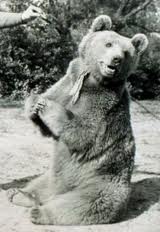
One of the volunteers is Irena (again much older than me, but Madame Irena sounds strange in English, doesn’t it?) who was sent with her family to Siberia. I don’t have to tell you that her journey was a totally different experience from today’s transsiberian railway tours. But she survived and later on served with 2nd Corps in Italy, where she met Woytek the Bear. She told a few funny stories about Woytek. He was bought as a cub, so he grew up hearing Polish all the time. Apparently he could understand when soldiers were swearing and he was showing his discontent by purring. Setting Woytek free was a good idea if soldiers wanted to have a beach just for themselves 🙂 He loved beer and cigarettes which he was eating. In Edinburgh’s zoo he was a kind of celebrity, he had a few veterinaries and an accommodation with heating just for himself 🙂 Irena was asked to tell about Woytek in a few documentaries made for Polish and English TV.

Woytek the Bear

Father of Mr Barbarski – current Chairman of the Institute, was serving under General Maczek (1st Polish Armoured Division) and was present at the capitulation of the entire garrison of Wilhelmshaven in 1945. He also took a part in the patrol sent to liberate the Oberlagen camp, where almost 2000 Polish women, including Home Army soldiers from Warsaw Uprising, were kept. Later on Mr Barbarski’s father married one of the women from that camp. It almost sounds like a movie screenplay, doesn’t it?

Oberlagen liberation

I spent a few hours at the museum listening to stories like these. I can’t wait to go back next week to find out even more!

Categories: Misc | Tags: , , , , , , , , , | 2 Comments

Save the bison

I’m sure you remember my post from 28th October about Konstanty Jelski. The Zoological Department of Warsaw University Museum benefited so much from Jelski’s work that when he ceased the cooperation, the Department quickly decided to send another scientist to South America. I’m going to write a few words about that scientist.

Jan Sztolcman

Jan Stanislaw Sztolcman was born on 19th November 1854 in Warsaw. After middle school (gimnazjum in Polish) Sztolcman started studying zoology at the Warsaw University. That was year 1872. In the same year he joined the Zoological Department and became an assistant to Wladyslaw Taczanowski (zoologist). His main task was helping Taczanowski with preparation of birds skins sent from South America by Jelski. The Department was financed by counts Aleksander and Konstanty Branickis (the latter was financing Jelski’s expeditions).

In 1875 Sztolcman went to Peru to continue Jelski’s work. He chose Lima as his HQ. His expeditions covered Peru and Equador. He discovered four new bird species, described Indian tribes and as one of the first ornithologists described hummingbirds.

After 6 years, in 1881 Sztolcman returned to Warsaw only to go back next year. This time he went to Equador and set up his base in a city of Guayaquil. During his expeditions he was accompanied by Jozef Siemiradzki (geologist and palaeontologist), whose written coverage of those expeditions is the only available source of information.  In the same year they met Ernest Malinowski (Peru’s national hero and the designer of Ferrocarril Central Andino – the central railway of Peru) with whom they spent Christmas. People who at least once spent Christmas away from home know how depressing it can be, so I’m sure it was a joyful time for all three of them. I’m going to dedicate at least one post to Ernest Malinowski. I’m also planning to take a ride across the Andes to see this marvel of engineering.

Sztolcman (sitting) and Siemiradzki with Sztolcman’s dog Jok (Dżok). Photograph taken in Equador in 1883

In 1884 Jan Sztolcman came back to Warsaw where three years later he became a director of  the Branicki’s Zoological Museum which in 1919 became the very first National Zoological Museum in Poland. While working there he became docent and then a professor of geology and palaeontology.

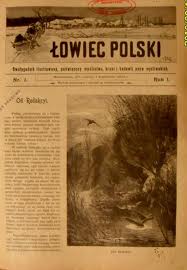
In 1889 he established a “Polish Hunter” (Łowiec Polski) magazine which he had edited till his death. He also established a Cynological Association.

Edition of “Polish Hunter” (Łowiec Polski)

To break the routine, in 1901 Sztolcman took a part in the expedition to Sudan.

In 1923 he was sent to Paris as Polish representative for the First International Congress for the Protection of Nature. He presented there his project of saving the European Bison (he based that on similar project that was very successful in USA). At that time there were only around 50 European Bison alive around the world, all of them in captivity (the last “free” European Bison was killed in 1919). At the moment there are around 3000 European Bison living.

European Bison. Sztolcman saved these majestic animals from extinction

Even though he was a very busy man he found time to give hunting lectures at Agricultural University. In 1926 he became a member of the State Council for Nature Conservation.

Jan Sztolcman died on 29th April 1928 and was buried in Wilanow.

Apart from saving the European Bison from extinction Sztolcman left almost 370 scientific publications. They were published in Poland, France, UK, Germany and Russia. Many species of animals were named after him. He was one of the most merited explorers of South America.

Categories: Vitae | Tags: , , , , , , , | Leave a comment

Between old and new

I’m embarrassed to admit but before August this year I’ve never been to Polish capital – Warsaw. I guess I was never “in the neighborhood” and besides Warsaw, like every capital, is not a very popular city amongst the rest of countrymen. But because it is  Polish capital, I always wanted to visit it. It’s a city full of symbols – we say that some place is busy as Marszalkowska Street, Muniek from T.Love was singing about Krakowskie Przedmiescie (literally Krakow suburb). Seeing the Palace of Culture and Science put a smile on my face as if I just saw the Statue of Liberty 🙂 And believe me, it is an ugly building, but I’ve seen it in so many movies that it’s just simply a part of Warsaw to me. We can’t forget how much the city suffered during the last war and you can see it straight away after entering the city. I’m not sure if I’ve seen a building older than 65 years. And we’re talking about a spot where a settlement has existed for more than ten centuries. I also had a personal reason to visit – my very good friend and his wife live there.

Walking around Warsaw makes you think. About history of the city, people who used to live there. I was whispering at the Tomb of the Unknown Soldier even though it’s almost in the middle of Pilsudski Square. The Royal Castle looks beautiful in the evening and it’s hard to believe it was re-built after the war.

Guard of honour at the Tomb of Unknown Soldier

Royal Castle in the evening

The original Zygmunt’s Column

Apart from spending some quality time with my mate (pub crawling :)) I really wanted to visit the Warsaw Uprising Museum. Don’t worry, I’m not going to discuss here if the Uprising was a good idea or not but the Museum is worth seeing. It’s very modern and everyone will find there something interesting to see. Life under occupation was hard but people dealt with it with wit. A few times during the visit I read things that forced me to move along as the cruelty of Nazis was unbearable to read about. But I think the most emotional moment for me was watching a short film “City of Ruins”. It was made from a German plane flying over Warsaw in 1945 and you can see almost a whole city flattened… 1.3 mil people living in Warsaw in September 1939 and after the Uprising less than 1000 people (they were called “robinsons”) hiding in ruins (including a famous pianist Wladyslaw Szpilman). Those two numbers show what Warsaw went through during the war.

Posters calling to fight

The Home Army’s soldiers’ oath

Kubus – homemade armored car

I would love to go back to Warsaw as there’s still so many places and things to see. On top of my list is Stare Powazki cemetery, place of resting for many famous Poles.

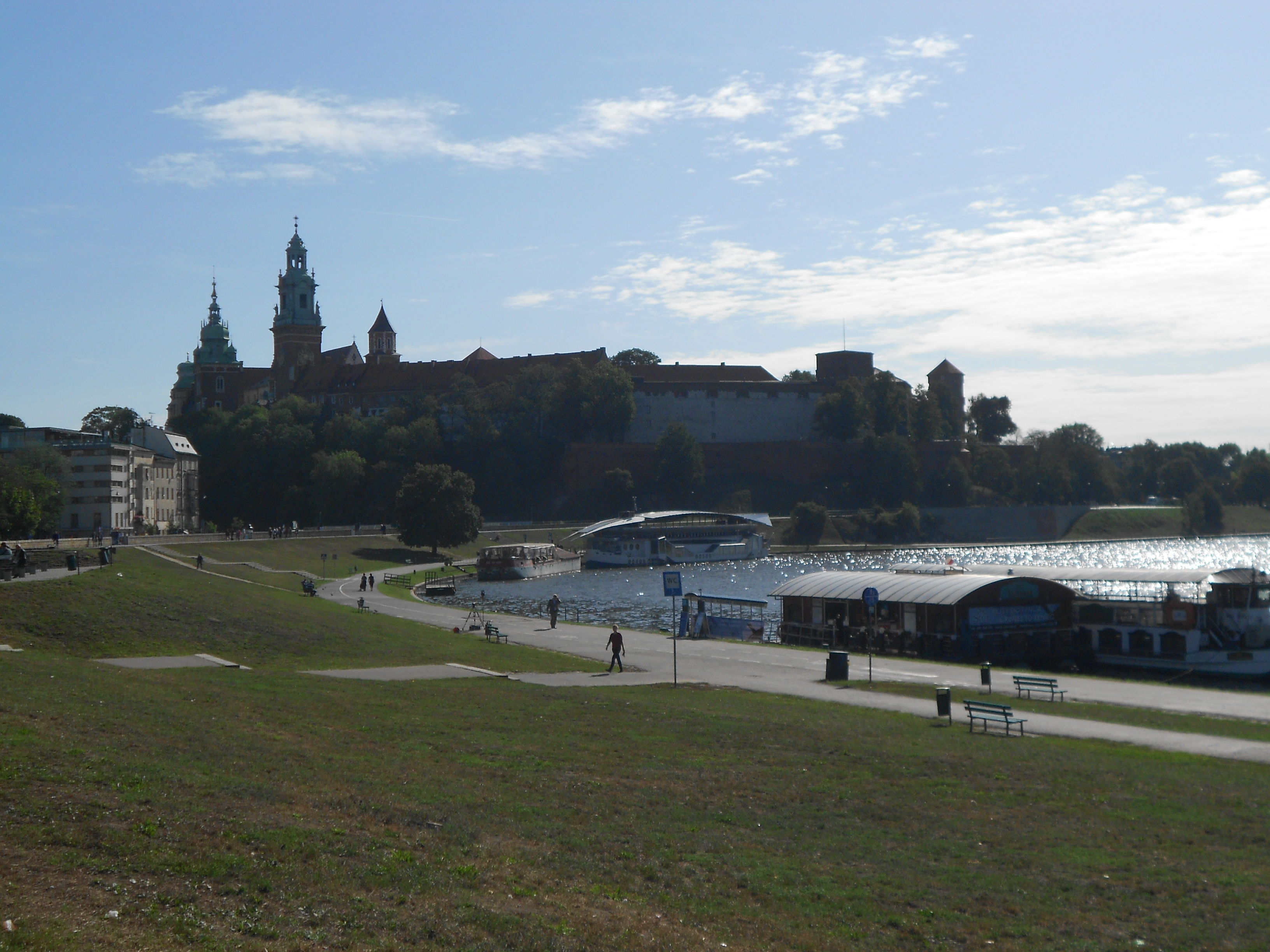
Wawel Castle

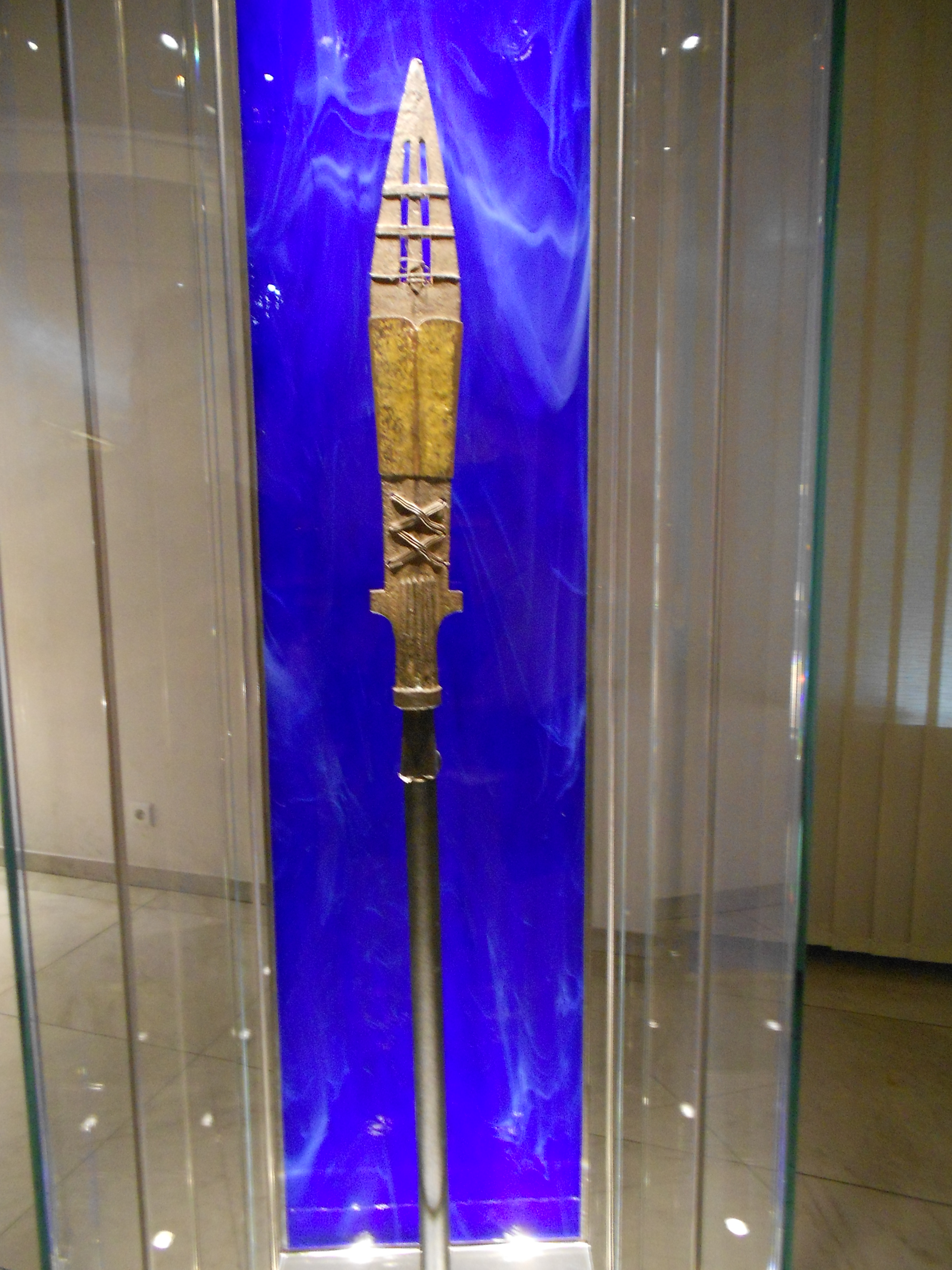
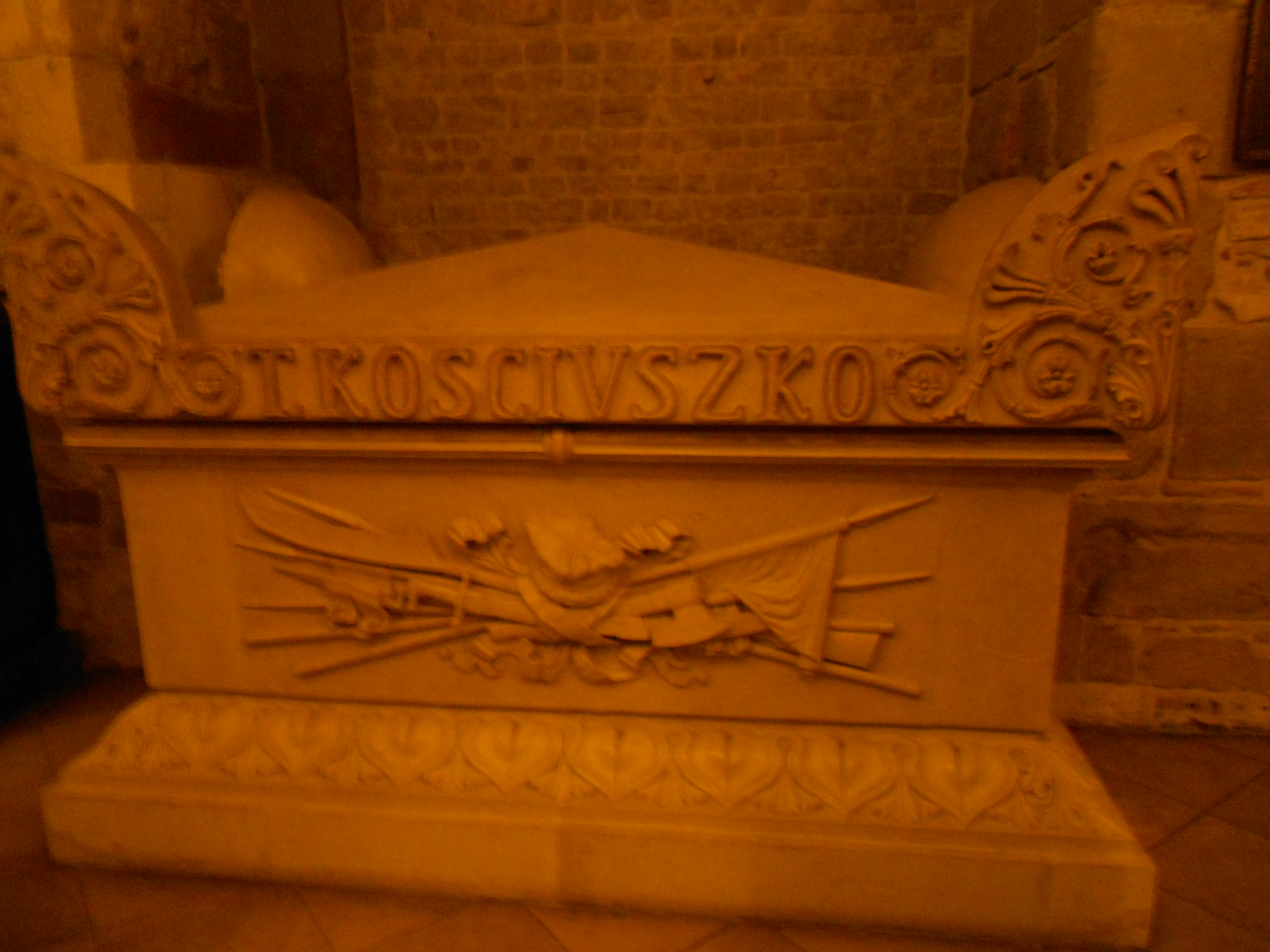
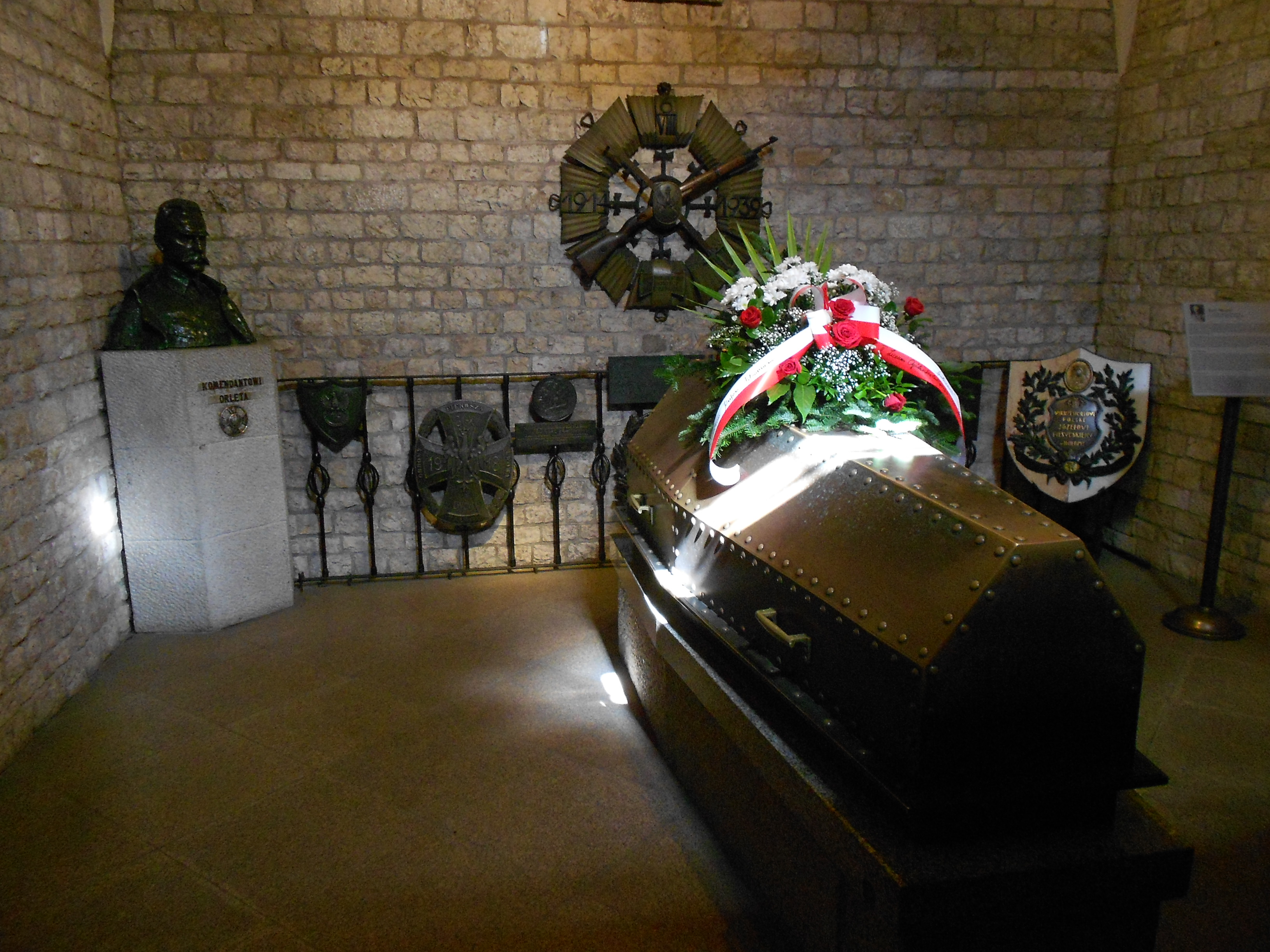
A few days later I went to Krakow. I must say I was a bit depressed after visiting Warsaw – such a beautiful city ruined in 5 years time. But I quickly felt alive again. Krakow is so… Polish, so full of great history. It wasn’t destroyed during the war, so there are a lot of gems waiting for tourists on almost every corner. Walking around I realized I was standing in front of Jagiellonian University, the oldest university in Poland, founded in 1364 by king Casimir the Great (at that time the University was called Studium Generale). In Warsaw I was thinking that Nazis did quite a good job in getting rid of everything that was Polish. After war we ended up as Soviet Union’s satellite country for 45 years (thank you dear Allies). Does it always have to be so hard for us, Poles? But then I heard the Heynal, saw the Wawel Castle, tombs of kings Casimir the Great, Wladyslaw Jagiello and John III Sobieski, the St. Maurice’s spear, which was given to Boleslaw I the Brave by the Holy Roman Emperor Otto III in 1000AD, tombs of Tadeusz Kosciuszko, Jozef Pilsudski and Gen Sikorski and I had an epiphany. This is our birthplace, the source of our strength. Thanks to Piast and Jagiellonian dynasties Poland was one of the most powerful countries in Europe. Yes, there were partitions, but we lived through it, without losing our identity. We gained our independence in 1918 only to lose it 20 years later, but there was the September Campaign of 1939 and Home Army (the Polish resistance) that gave us hope. After communism there was time of Solidarity and Lech Walesa… I understood that “Poland has not yet perished, So long as we still live”. Of course we quarrel and argue all the time, but if there is a need we always unite to fight the enemy – something none of the occupants could ever understand. I come from the generation that had nothing to fight for. Old enough to remember queuing for toilet paper but too young to fight the system. But I remember 1997 and the Great Flood. The way we helped each other was amazing. It didn’t matter if someone was old or young, from left or right wing, we all built the walls to protect our cities and homes and when the water receded we all started helping the ones who suffered most. I’ve never seen anything like that in my life before. Fortune is fickle, after bad times good ones come. So when I turn on the TV in Poland and see politicians arguing with each other, I say to myself – it’s all good 🙂

St. Maurice’s Spear

Tadeusz Kosciuszko’s tomb

Jozef Pilsudski’s crypt

Categories: Misc | Tags: , , , , , , | Leave a comment

A spider-man :)

If you’re not very much interested in zoology, you probably haven’t heard about Konstanty Jelski, a Polish zoologist and explorer, but he’s well worth mentioning.

Konstanty Roman Jelski was born on 17th February 1837 in a small village called Lada, in today’s Belarus. His parents, Michal and Klotylda (sister of Stanislaw Moniuszko – a Polish composer), were prosperous, which allowed young Konstanty to get well educated.

Konstanty Jelski

After finishing secondary school in Minsk, for 3 years Konstanty studied medicine in Moscow, from where he moved to Kiev to study at Science and Environmental Department. Unfortunately, in 19th century’s Poland, a way to a scientific career led through one of the occupant’s university (Russian, Prussian or Austrian). It wasn’t easy to resist the forceful imposition of German or Russian culture and language, when anything related to Poland was banned. But as you know, Poles managed to live and keep their identity through 123 years of partitions. But we have great examples of how hard it is in today’s world. According to International Helsinki Federation for Human Rights 50% of Tibetans are analphabets and Chinese educational policy is called “assimilating”. We, Poles, have heard that before…

In 1858 Konstanty submitted a dissertation about birds’ tracheae and obtained a gold medal and master’s degree. He spent a few years working at Zoology Department as a keeper and in 1863 was offered a teacher position at the university, but he refused saying he wasn’t capable of such an honour. He wanted to continue his education in Germany, but he landed in… Turkey, where he made his living by colouring maps for schools.

In 1865 he went to Paris and in July on board of “Amazon” he sailed for French Guiana. You can find Konstanty’s stories from 1865-1871 in his book, which unfortunately is hard to get and it was published in Polish. But when reading it you can find out how dedicated to his work he was. I think we can easily say his work was his passion. He went through hell when he thought he would have to stay aboard while in Madeira, because “some snails’ and insects’ species are not present outside Madeira” and it was such a great opportunity to see them.

19th century postcard from French Guiana

After four years in Guiana he went to Peru, where he stayed for ten more years. From 1868 he was supported by count Konstanty Branicki from Poland (explorer and naturalist himself) who wanted Jelski to go deeper into South America to collect specimen and then send them to Poland. Thanks to this cooperation many examples of South American fauna and flora were sent to Poland and tens if not hundreds of dissertations were based on them. To give you a sample – 300 species of spiders were collected and posted by Jelski, only from Peru…

Birds’ specimen sent to Poland by Jelski

But it’s not that he concentrated only on work, apparently he wanted to marry a Peruvian woman, but I guess none of them was interested 😀 After coming back to Poland he married his cousin, Helena Korsakowna and became the curator of the Natural History Department of Academy of Learning in Krakow. The salary must have been low as he went very often to Dalmatia (today’s Croatia) or France to collect specimen and sell them afterwards to support the family budget. Apparently, if he didn’t have to waste time to earn more money he would have become even a greater scientist. He was making Chinese ink that was as good as the original one. His fruit wines were so good that people weren’t able to guess what fruits they were made of.

Many orchids were collected and sent to Poland

Konstanty was 58 at the time of his death, so still quite young. Ha had a stroke and was told by the doctor to rest in bed, but Konstanty was not the resting type, he’d always had so much to do. He had another stroke and on 26th November 1896 Konstanty Jelski died.

Konstanty Jelski was a typical 19th century’s Polish scientist – educated at foreign university, dedicated his life to science. Many young scientists (not only Polish ones) made use of specimen collected and discovered and studies conducted by Jelski in South America and he still is an acclaimed ornithologist and zoologist.

Categories: Vitae | Tags: , , , , , , , | 3 Comments

Discoverer of Ancient Samarkand

It’s been a while, I know, but don’t worry I’m back in business and guess what?!? Only 264 days left 😀

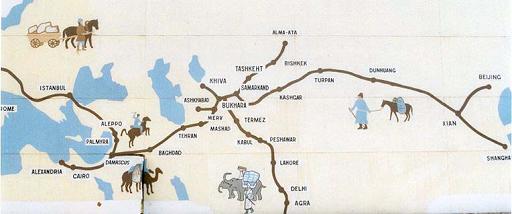
Almost each time I talk to someone about my travel plans I can see confusion on their faces when I say I want to go to Uzbekistan… Why would I go there??? To most of the people this name sounds… exotic. But people who read Marco Polo’s Description of the World or anything about the Silk Road know how crucial that area was for caravans heading west.

The Silk Road

I’m going to focus only on Samarkand this time, but don’t worry, Uzbekistan will re-appear on my blog. The city was founded in 8th-7th century BC on a hill called Afrasiyab and was called Marakanda. In the 6th century BC massive city walls were built by Achaemenids (Persian dynasty which ended their rule thanks to Alexander the Great :D). Yes, Samarkand is as old as the Eternal City. Alexander’s wife, Roxana, came from Samarkand. In 8th century AD Samarkand was conquered by Arabs and Islam became main religion. The next important date in city’s history is 1220 when it was… destroyed by Genghis Khan. But in 14th century it was rebuilt by Timur (also called Tamerlane) who made Samarkand a capital of his empire. In 16th century Samarkand became a part of Bukhara (or Bokhara in 19th and early 20th century in English publications) khanate and went into decline. In 1868 the city came under Russian rule and 8 years later today’s post’s hero appeared on the scene…

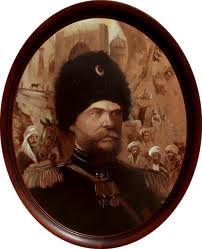
Leon Barszczewski in a Russian officer’s uniform

Leon Barszczewski (impossible to pronounce, I know :D) was born on 18th (or 20th) February 1849 in Warsaw as a son of a nobleman from Suwalki. His family had to leave Podlasie region to avoid repressions after Spring of Nations in 1848. From Warsaw the family moved to Biala Cerkiew in Ukraine, where soon after Leon’s parents died. After that him and his younger brother, Wlodzimierz, were placed in a boarding school, which was a common way of dealing with polish orphans from politically incorrect families. How right the Russian regime was – in 1863 Leon’s five older brothers joined the January Uprising. 😀 Leon went to military school in Kiev and after graduating he joined the Junker Infantry School in Odessa. He didn’t become an officer because of his stubbornness – during the exams he defended polish insurgents from 1863 – a strange thing to do for a soon-to-be Russian officer. He was expelled from school and sent to a regiment in Bessarabia (today’s Moldova and Ukraine). That was actually a good thing for Leon as he learnt there a lot of useful skills like tailoring, shoemaking, carpentry, cooking and even some basic medical skills. He also learnt French and German and unlike his fellow soldiers, who spent their salaries on alcohol and women, he used his money to buy books. Thanks to Nikolai Osipov Leon became a quite proficient photographer. Later in Asia, wherever he went, he always had his portable 10kg camera with him.

In March 1876 Leon and his unit were sent to Bukhara. He was very enthusiastic and excited about it. Vast areas of Central Asia were unknown to Europeans at that time. He was about to see lands conquered by Alexander the Great and Genghis Khan. That’s why he volunteered. He must’ve felt like a 6-year old boy before Xmas… He was given a task of charting new routes to Afghanistan and China. It took them 8 months to get to Samarkand. It will take us a few hours to fly from Istanbul to Tashkent (yes, our plan has changed again 😀 – we’ve added Georgia, Armenia and Turkey to our list).

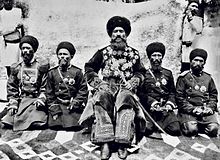
Barszczewski spent 20 years in Samarkand, he met there Irena Niedzwiedzka, whom he married in 1880 and who died 10 years later, leaving Leon with five children. During those 20 years he organized or took part in over 20 scientific expeditions. He found deposits of turquoise, graphite, garnet, rhinestone, iron, lead, silver, coal, gold and naphtha. Because of his scientific reports many Russian scientists arrived in Samarkand to join one of Leon’s expeditions. He was fascinated by glaciers, he organized a few trips just to describe and photograph them. He almost lost his life during one of those trips while… taking a picture. But it was worth risking his life – those photographs won him a gold medal at the exhibition in Paris in 1895. His second gold medal was won in Warsaw in 1901 for landscapes and portraits of inhabitants of Central Asia.

A photograph taken in Samarkand

Through his expeditions he got to know peoples of Central Asia. He was often saying that one can solve a lot of problems with a kind word or just by being polite. Thanks to this approach we can admire scenes from the past in photographs taken by Barszczewski. Apart from taking pictures Leon was collecting ceramics. Over the years he built quite a collection. That’s how he made a discovery that puts him together in one line with Heinrich Schliemann (discoverer of Troy) or Arthur Evans (a man who discovered a palace in Knossos). One day Leon saw young boys throwing stones at old-looking vases. For a few pennies they showed him a place where they found them. First, he thought he found an old city founded by Alexander and destroyed by Mongols in 13th century. In a short period of time he dug out more ceramics, statues and a silver box with pearls and jewellery made of gold.
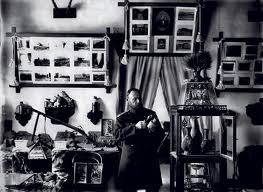
Leon Barszczewski in his office

Before starting the second phase of excavations he read all available historical sources but still had no idea how big his discovery was. He excavated a few streets, houses and found objects that could be more than 2000 years old. He realized it was a part of a bigger settlement. Neither Moscow nor Petersburg were interested in Leon’s discoveries, but someone else was. French archaeologists wanted to buy from Barszczewski all the items. Only part of the collection was sold and funds were used by Leon to open a coal mine. The rest of exhibits were donated to the city of Samarkand to start a museum. Until death Barszczewski had no idea he discovered ancient Samarkand.
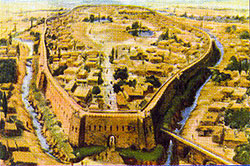
Afrasiyab (Marakanda)

Thorough excavations took place in 1960s and 1970s led by Soviet archaeologists. Of course none of the books published as a result had mentioned Barszczewski as a discoverer. Who would care about some Pole…

Leon’s service brought many benefits to the Empire. He found many geological layers, was a member of a Russian Geographical Society and Geological and Botanical Society, awarded with many awards and medals e.g. Golden Star of Bukhara from Emir. Was promoted to lieutenant colonel and his future seemed very bright. He was offered a promotion to general if he converted to Eastern Orthodoxy. Apparently he answered with a telegram: I refuse to convert. I’m a Polish catholic…

Probably that was the reason for sending Barszczewski away from his beloved Central Asia to Siedlce in today’s Poland. It wasn’t easy for the Barszczewskis, of course they could speak Polish but with a strong accent, and that fact wasn’t helping to assimilate. Also, after so many years spent in Tsar’s service I think he was a bit torn between Poland and Russia. He was very surprised when at the breakout of Russo-Japanese War in 1904 his speech about sense of duty given in Russian had little effect on inhabitants of Siedlce… When he founded a Trade School for girls (he used profits from his coal mine for that purpose), out of 200 girls that enrolled in only 16 showed up on the first day… Eventually a high level of education encouraged more girls to join.

In 1906 Leon retired but his life as a pensioner was rather short. On 22nd March 1910, wrongly accused for stealing military money he committed suicide at a hotel in Czestochowa. He was buried at the local cemetery but was exhumed in 1995 and moved to Stare Powazki in Warsaw.
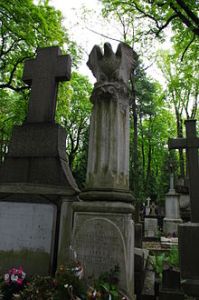
Barszczewski’s tomb at Stare Powazki cemetery

He left a few hundred photographs showing life of Central Asian inhabitants in 19th century. Apparently he also had a talent for writing, but his notes are either missing or are impossible to decipher. His heir, Igor Strojecki is looking after what’s left. In recent years exhibitions were organized in a few major Polish cities, showing Leon Barszczewski’s life achievements.

Samarkand has become a very popular place amongst foreign tourists but I’m sure, if you leave the city behind you, you will be able to see a true Central Asia, the one Barszczewski loved so much.

Registan with Madrasahs. Contemporary picture

Categories: Vitae | Tags: , , , , , , , , , , | 1 Comment

A Little Piece of Poland

The 4th of July was a sad day for Poles. It marked 69th anniversary of Gibraltar catastrophe and death of General Wladyslaw Sikorski, Chief Commander of Poland and Prime Minister of Polish Government-in-Exile. I decided to honour General by visiting The Polish Institute and Sikorski Museum in London.

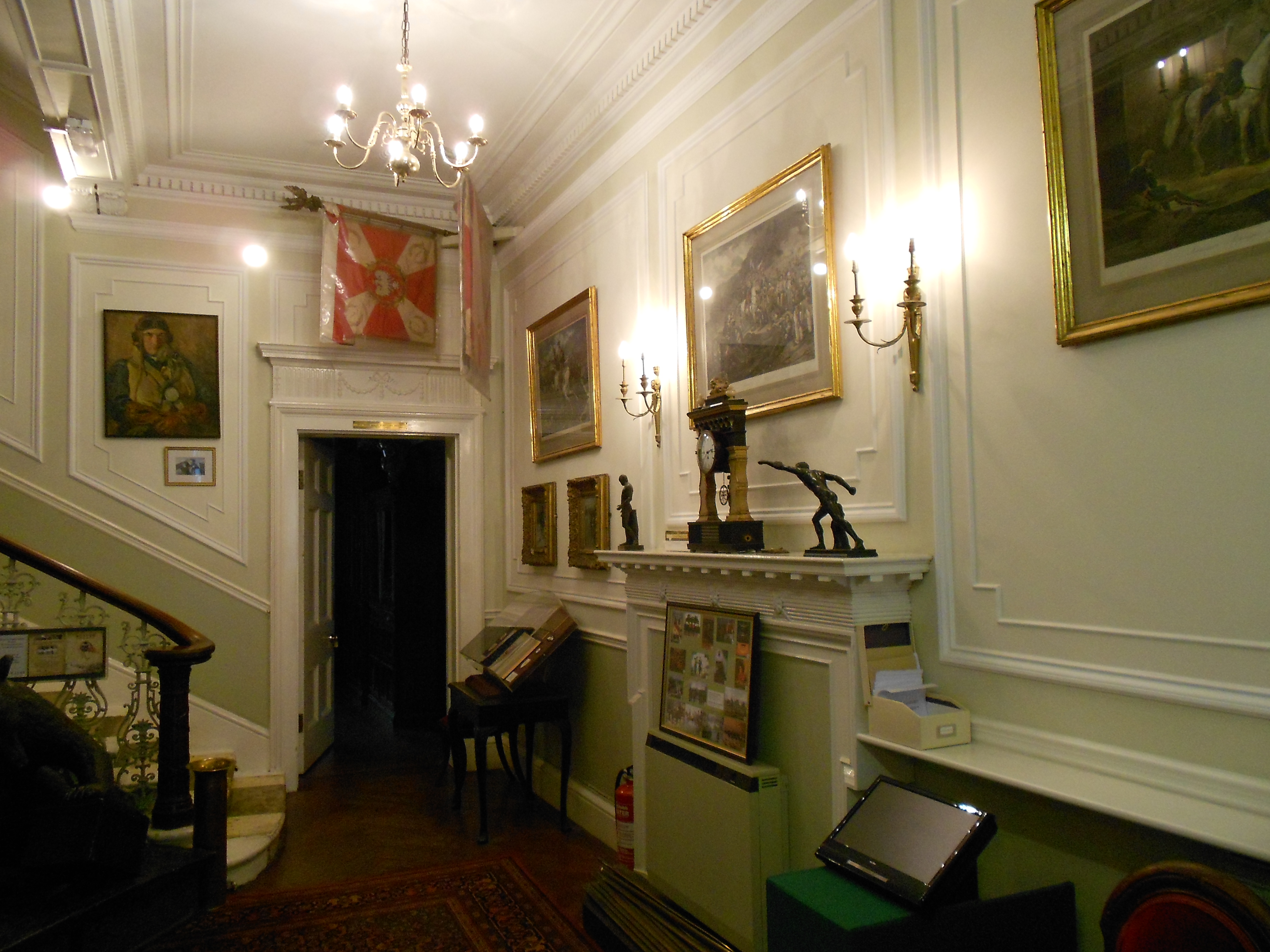
The Museum’s main hall

The Museum is a home to many documents, regimental colours, uniforms and personal effects of statesmen, soldiers and ordinary men. The Museum’s building was bought right after the WWII, it’s located at 20 Princes Gate, 5 min walk from all the museums in South Kensington. The Museum is open Tue-Fri from 2 to 4 pm and on the first Saturday of the month 10:30 am – 4 pm.

I don’t think 2 hrs is enough to see everything but there’s a chance you will be the only visitors on a weekday. The whole attention of Mr Romuald Kostrzewa, who was our guide, was focused on me and my brother. And believe me, his knowledge is so vast that he could talk for hrs… Stories I heard made me feel like I moved back in time. The fact that Mr Kostrzewa is a veteran makes the whole experience even more amazing – he joined Pulk Ulanow Karpackich (Carpathian Uhlans) in 1943 (unit this fought in North Africa and in Italy).

One thing I heard saddened me a lot. Apparently “the new immigration” that arrived after 2004, doesn’t visit the museum, doesn’t want to connect with the “old” generation. It’s strange considering the Museum is a little piece of Poland. And I mean the real Poland. When our parents were taught the wrong (or right, according to Soviets) version of history, here in the UK lived people who fought for free Poland and who knew that Soviet “liberation” didn’t mean the end of the war for Poles. We just switched the occupants…

On two floors there are thousands of exhibits and it looks like the Museum could use more space. I’ll show you now a few snapshots.

We’re going to start in Gen. Sikorski’s room.

Gen. Sikorski’s painting and a car flag from General’s car

Desk used by Gen. Sikorski

I’m sure some of you heard a story about Wojtek (Voytek) a  Syrian brown bear that served in 22nd Artillery Supply Company in Polish II Corps. He became a soldier of the Company and was getting his soldier’s pay in… beer and cigarettes. Wojtek went with Polish Army from Iran through North Africa to Italy. After the war Wojtek was given to Edinburgh Zoo. Until his death in 1963 Wojtek smoked cigarettes and always recognized Polish language when visited by Polish soldiers or journalists.

Wojtek the Bear

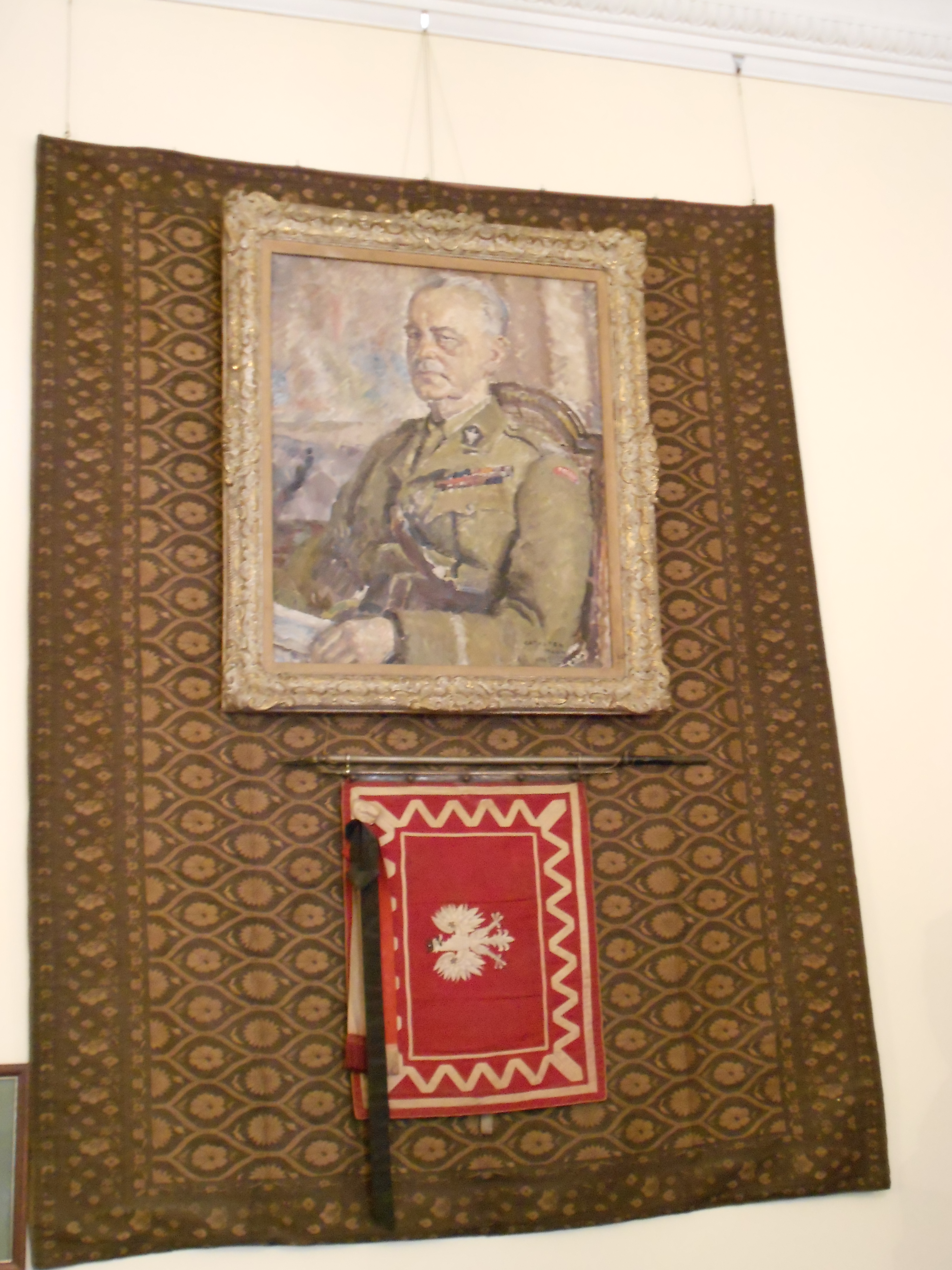
I think the most valuable exhibits are the regimental colours. You’ll find in the Museum colours of Polish Army from 1939 and also Polish Armed Forces in the West.

Polish 1st Independent Parachute Brigade’s banner awarded the Military Order of William by Queen Beatrix

The Brigade’s banner was sewed in Warsaw and was delivered from occupied Poland  to the Brigade in England.

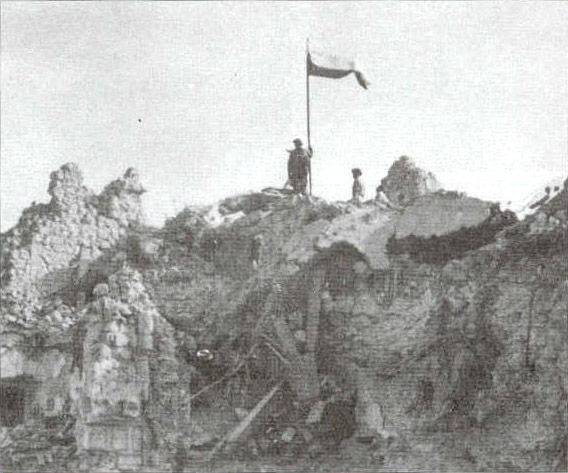
I’m sure many of you have seen this picture before.

Polish flag over the Monastery’s ruins

In the early morning of May 18 1944 a reconnaissance group of Polish 12 Podolian Uhlans Regiment raised a Polish flag over the monastery’s ruins.

I’ll just say I was quite moved when taking these pictures.

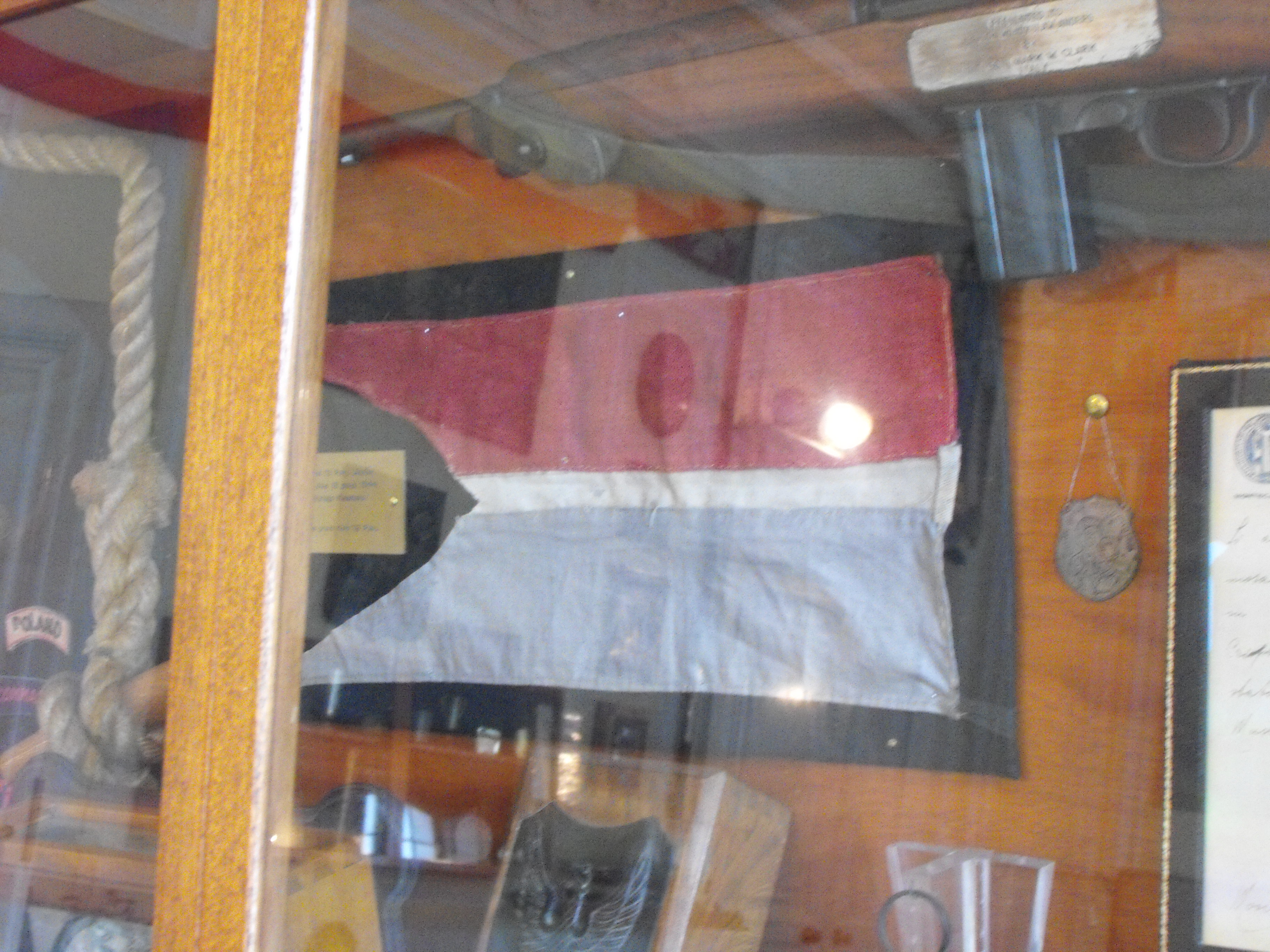
This pennon was first raised over the ruins

And this is the flag you can see in many history books

I mentioned Mr Kostrzewa told us several stories. One of them was about Polish Model 34 sabre. It was a part of regular equipment in 1939 but this particular sabre was found in a German tank in… North Africa 🙂

Model 34 sabre

I hope a few photos I showed you will make you want to see more. If you have a few spare hours in London, don’t spend £17 on Churchill War Cabinets, go to Sikorski Museum instead.

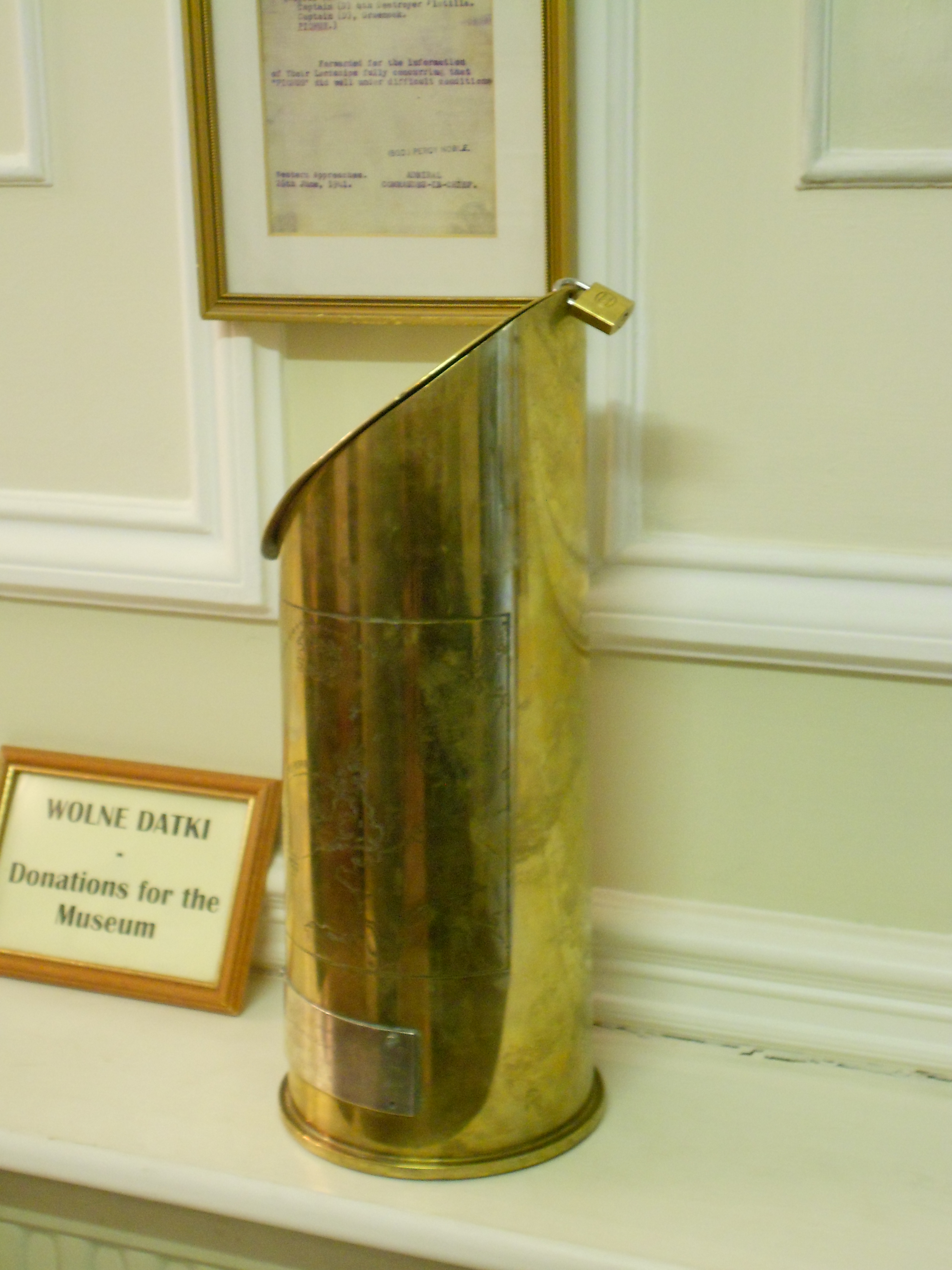
The Polish Institute receives no financial aid from any official body. It relies on generosity of the public. In the Museum you can get souvenirs and books (they don’t take cards) and all notes and coins are dropped into this shell from ORP Piorun (destroyer “Thunder”).

Please be generous 🙂

Categories: Misc | Tags: , , , , , , , , , , , | 1 Comment

Blog at WordPress.com.