
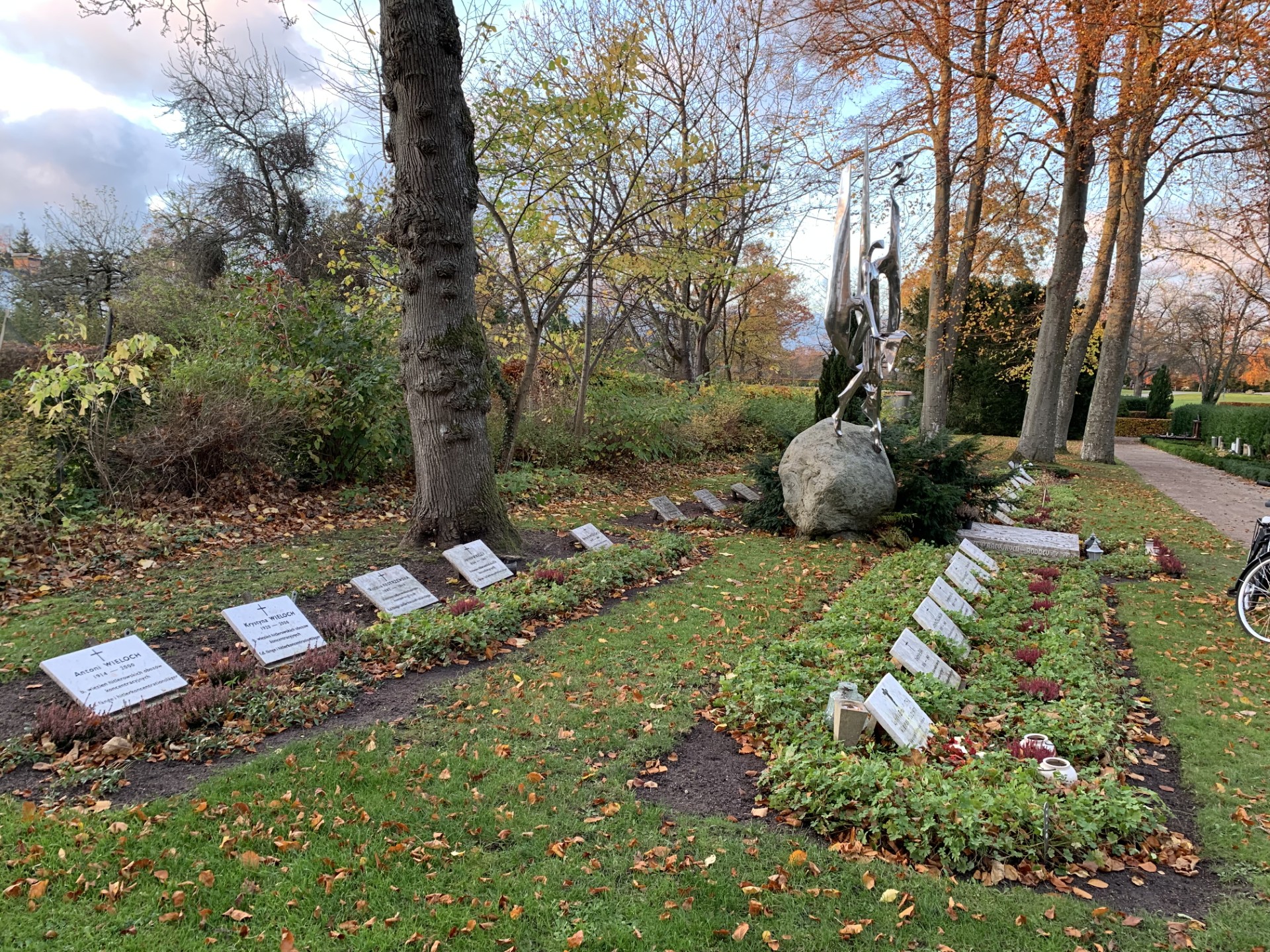
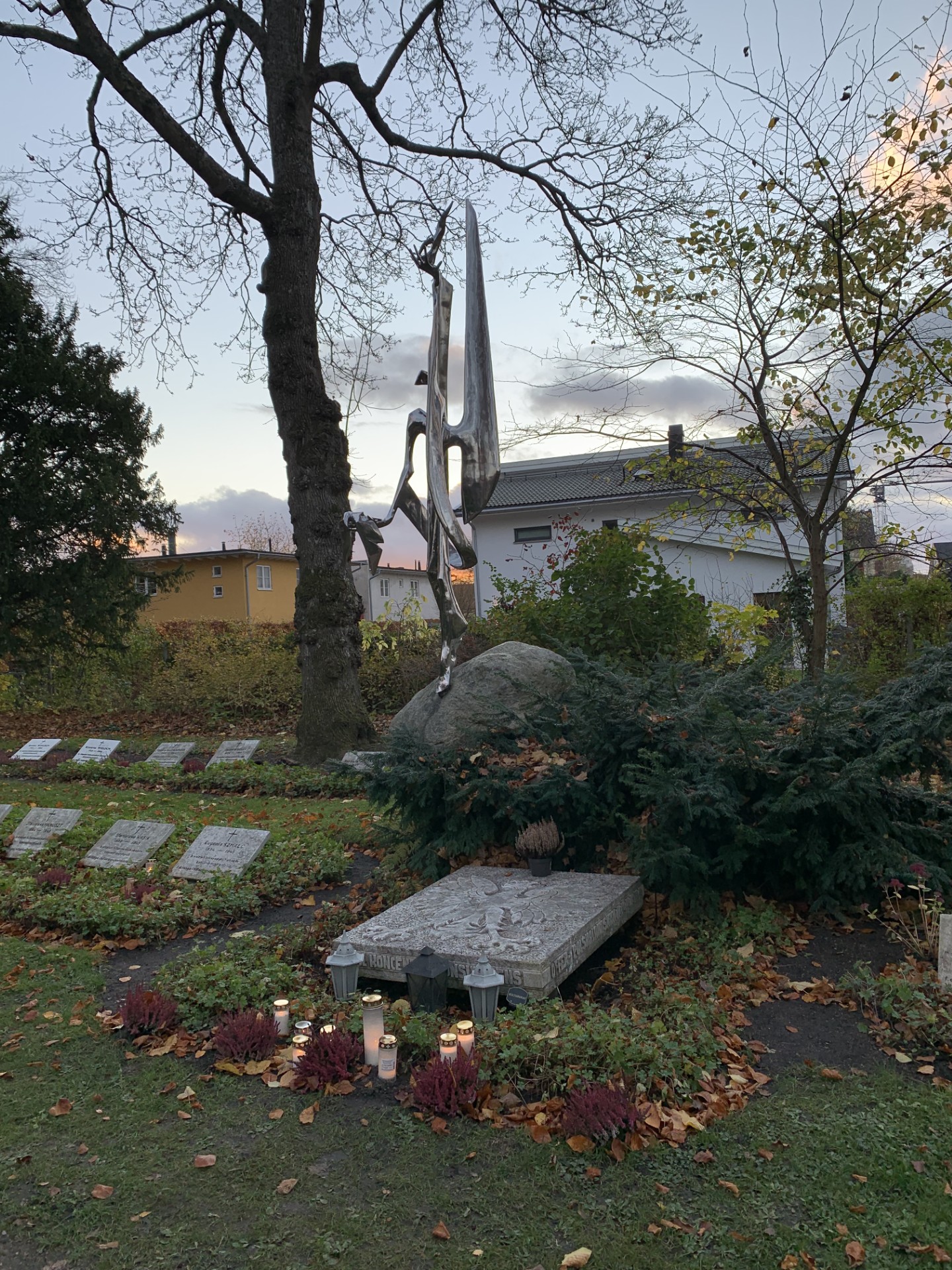
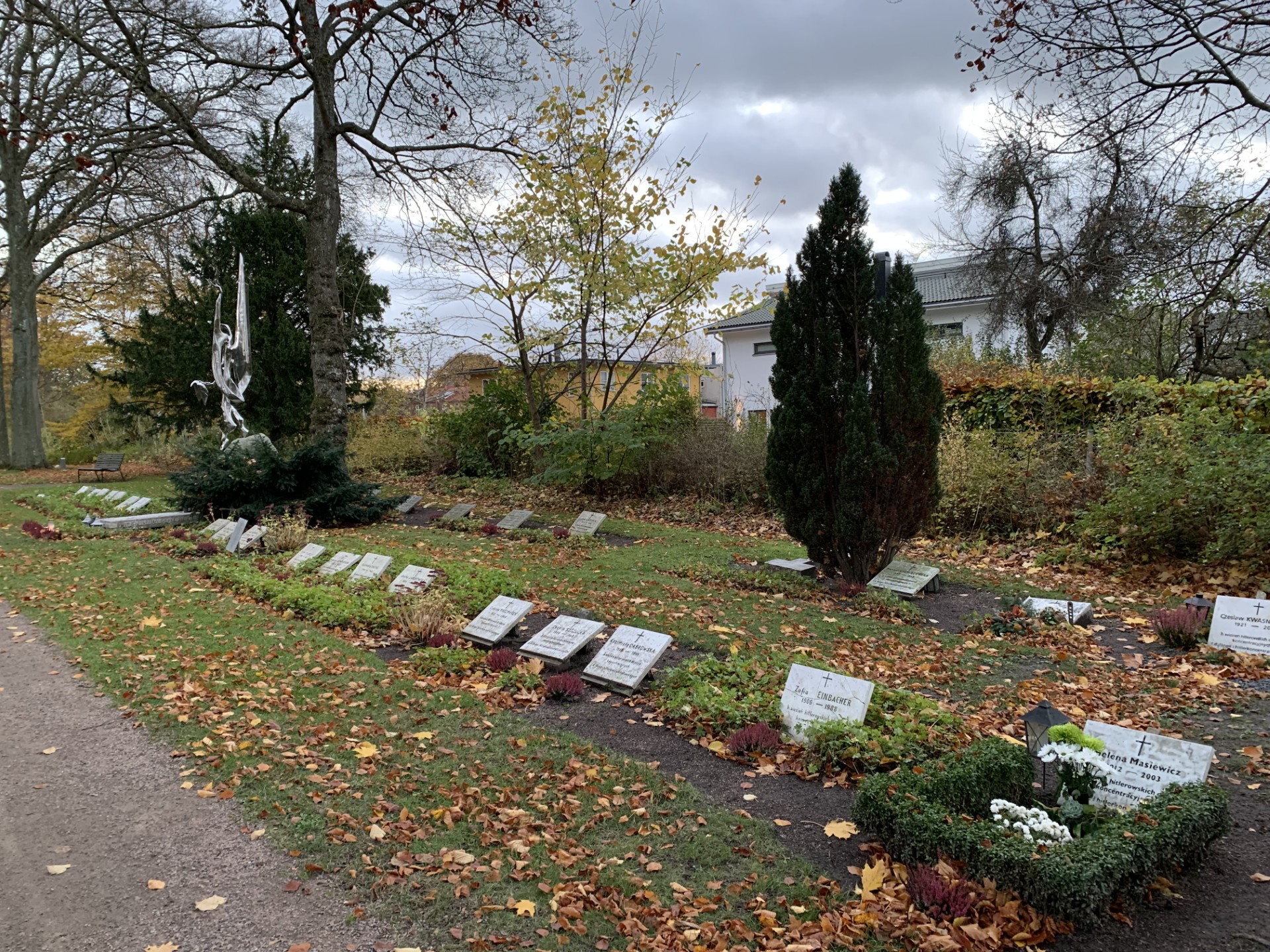
If you ever find yourself in Lund, in southern Sweden, take a moment to visit the Norra kyrkogården cemetery, where you’ll find the “Polish Alley.” There are about 40 Polish graves there, most of which belong to former concentration camp prisoners. The alley is easy to find, marked by a beautiful sculpture by Nándor Wagner, a Hungarian artist who lived and worked in Sweden and Japan. The steel sculpture, unveiled in 1963, is called “Angel,” but it is also a Monument to the Victims of Concentration Camps. Wagner himself had to flee Hungary in 1956, so the fact that he is the creator of this monument to the victims of Nazi Germany carries even greater significance.
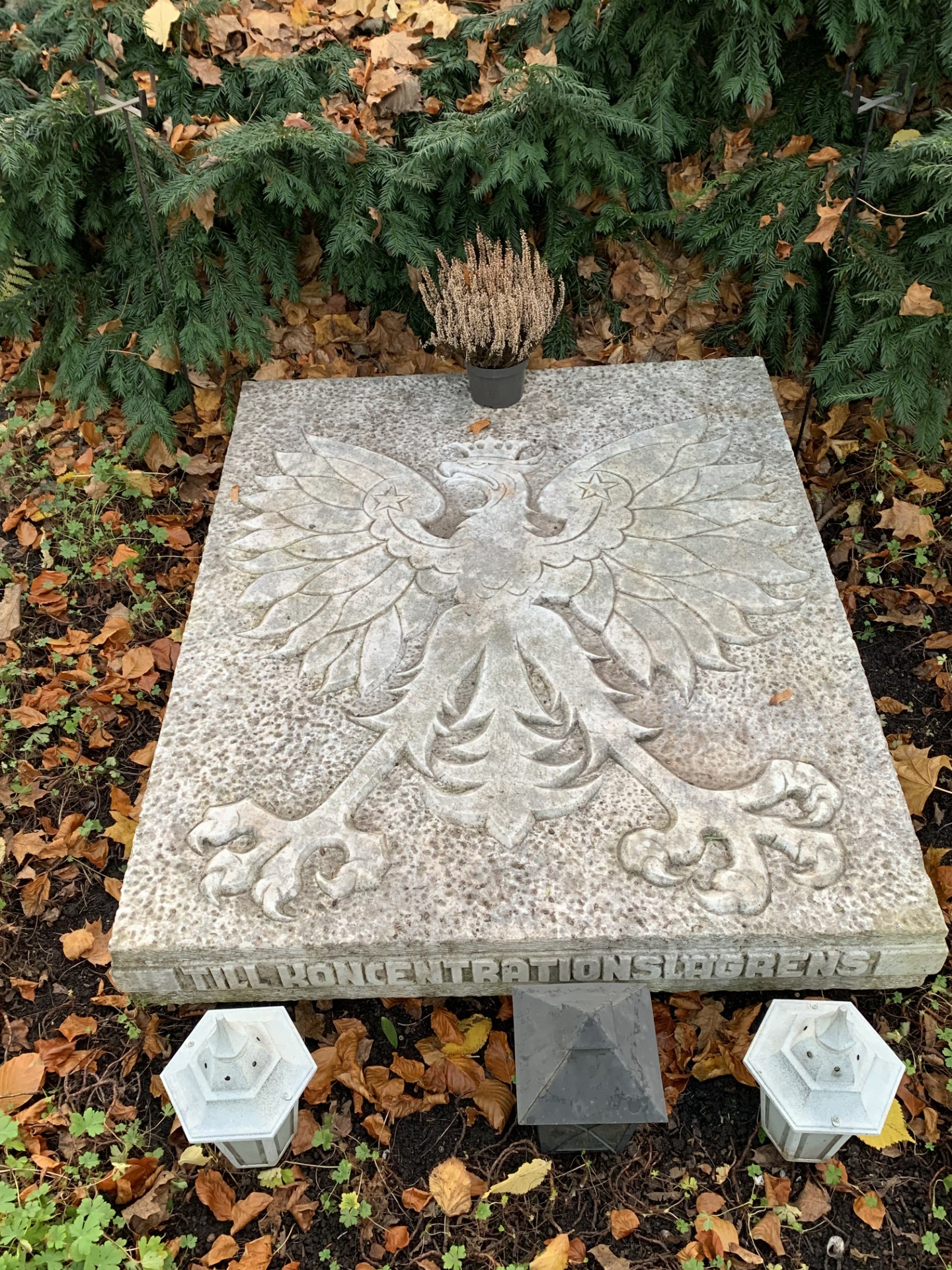
The sculpture stands 430 cm high on a stone symbolizing the coast of Sweden, where many of our compatriots arrived. Beneath the sculpture lies a plaque featuring the White Eagle. The sculpture symbolizes the right to freedom and the need to fight against totalitarian systems, and was funded by the Polish diaspora in Sweden and other countries. The monument was unveiled on 27 October 1963, by General Zdzisław Wincenty Przyjałkowski, president of the Polish Council of Refugees in Stockholm and a veteran of FWW, the Polish-Ukrainian War, the Polish-Bolshevik War, and SWW.

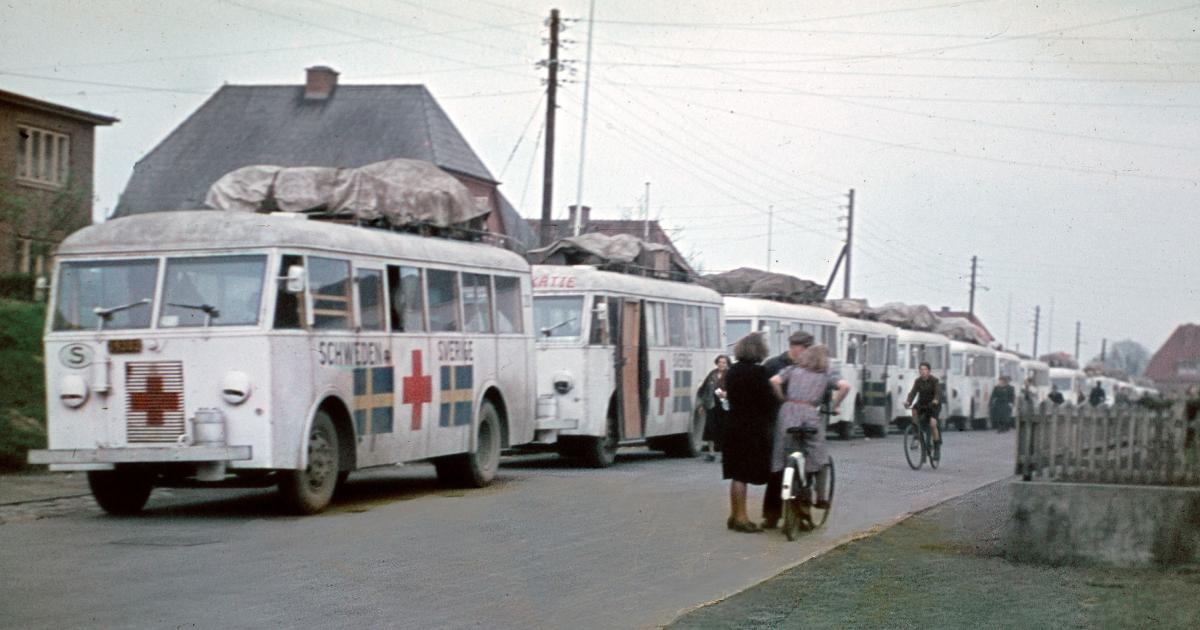
And how did Polish prisoners from German concentration camps end up in Sweden? It was all thanks to the so-called White Buses. In late 1944 and early 1945, an idea emerged in Sweden for the Swedish Red Cross to evacuate Danish and Norwegian citizens from German concentration camps. This effort was led by Count Folke Bernadotte, who traveled to Germany in February 1945 to persuade the Germans to support the plan. There, he met with figures such as Himmler, to whom he gifted a 17th-century work on Swedish runic inscriptions (Himmler was fascinated by ancient Germanic tribes and Scandinavians, whom he also considered “pure Aryans”). Bernadotte met with Himmler three more times to negotiate the release of additional prisoners.

The first convoy set off in March 1945. The staff consisted of nurses, doctors, and soldiers. At the request of the British, the vehicles were painted white to reduce the risk of being fired upon by Allied aircraft (though this was not entirely effective). They were also marked with red crosses. Over the course of two months, the Swedes and Danes (who joined the effort) managed to evacuate around 20,000 prisoners from the camps, including approximately 6,000 Poles! The prisoners were transported using the buses mentioned, as well as trucks, trains, and ships.
A large number of the prisoners were ill and exhausted. It’s no coincidence that most of the headstones in Lund show 1945 as the year of death… Dr. Zygmunt Łakociński, a lecturer of Polish at Lund University, became involved in assisting Polish prisoners. This was necessary, as many Polish prisoners spoke only Polish. Dr. Łakociński soon had the idea to record the testimonies of the prisoners, leading to the creation of the Polish Research Institute (Polski Instytut Źródłowy – PIŹ). For a short time, the PIŹ team was funded by the Swedish government, but this support ended in late 1946. From then on, work continued on a volunteer basis. Over 500 testimonies were gathered, along with many keepsakes and documents. The entire archive was donated to Lund University and was put online a few years ago (link at the bottom of the post), and some of the keepsakes were given to the Lund Museum of Cultural History, “Kulturen” (https://www.kulturen.com/utstallningar/att-overleva-roster-fran-ravensbruck/).

At the cemetery, I came across another Polish trace, namely the grave of Second Lieutenant Teodor Farbisz, an officer from the ORP “Sęp”. I wrote about Polish submariners some time ago here. Almost 20 of our submariners are buried in Mariefred or nearby, but as you can see, some also made their way to southern Sweden. Apparently, there is another grave of a Polish submariner in this cemetery, but I haven’t been able to locate it. Yet…

If you enjoy reading my posts here and on FB, feel free to buy me a coffee here 😉
Bibliography:
Persson S., Białe Autobusy, Warszawa 2012.
https://www.ub.lu.se/hitta/digitala-samlingar/witnessing-genocide

 Polish traces around the world