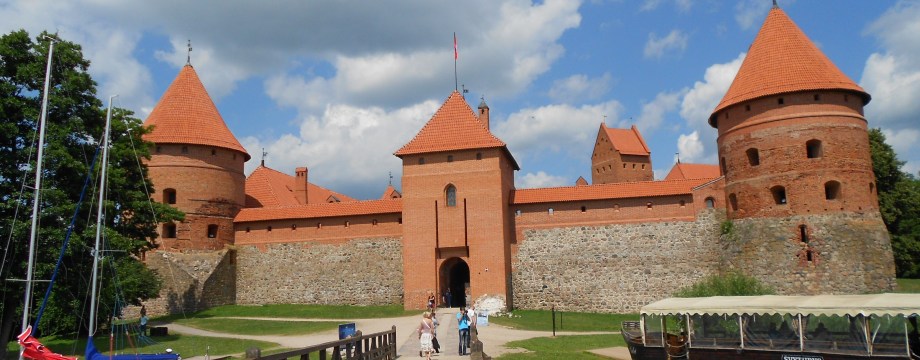
When I was recently looking for something on English version of my blog I’ve realized that I haven’t translated my entry from Kaunas, which ends my Lithuanian saga. Well, the time has come then.
Kaunas is the second largest Lithuanian city in terms of population and is famous mainly for the fact that in the inter-war period it served as the capital of the country as thanks to Gen. Zeligowski, Vilnius was brought back to Poland. I stayed with a very nice couple from Couchsurfing, Tautvydas and Irena. As Tautvydas himself said, if it wasn’t for the above-mentioned General Zeligowski’s escapade, Kaunas would still be a small town today but due to its former function certain investments had to be made. Kaunas makes an impression of a little provincial town despite the fact that I could hear foreign tourists in the city centre. There were also groups from Poland.
I arrived in Kaunas on Friday afternoon and together with Tautvydas we went to a pub with a really nice décor. Because of the distance from the centre there were only locals inside. The climate reminded me a bit of Wroclaw’s Niebo pub from the old days. But let me first say a few words about my search for my hosts’ apartment. It is located in a block of flats which like the ones in Vilnius, are in need of renovation. I asked the local men standing next to the off-licence shop for the address and they they told me where to go and then I heard a question: “You – America?” 🙂 I said I was from Poland and then I started wondering if I did the right thing. Ah, those stereotypes. Those nice men treated us to the Russian disco music until late hours. Very nice atmosphere 😉
As Tautvydas had to work on Saturday and Irena was supposed to came back from Vilnius in the evening, it was time to do some sightseeing. Kaunas can be easily seen in one day. Below are some photos.
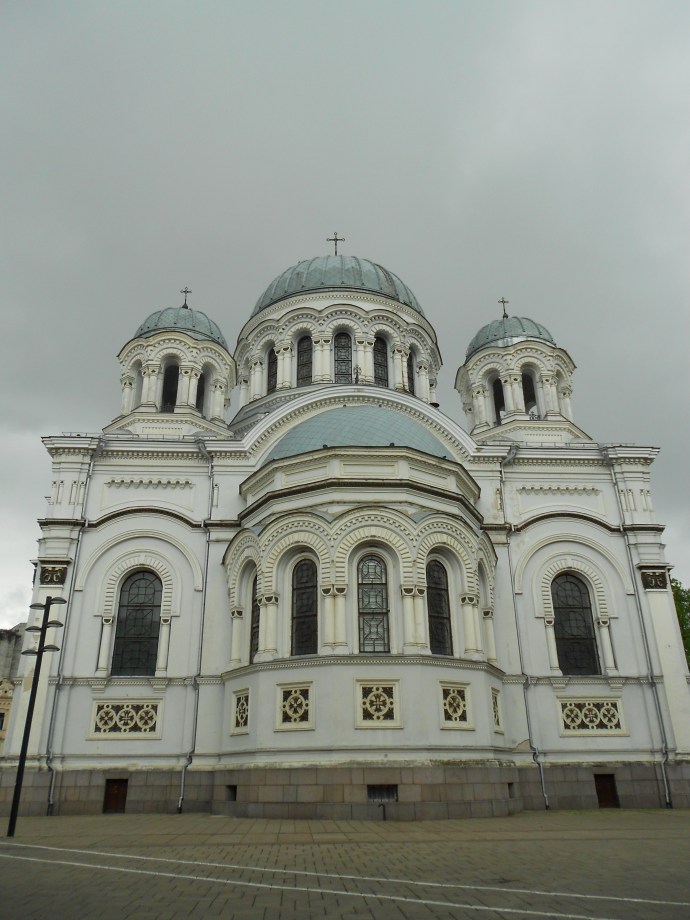
The garrison church
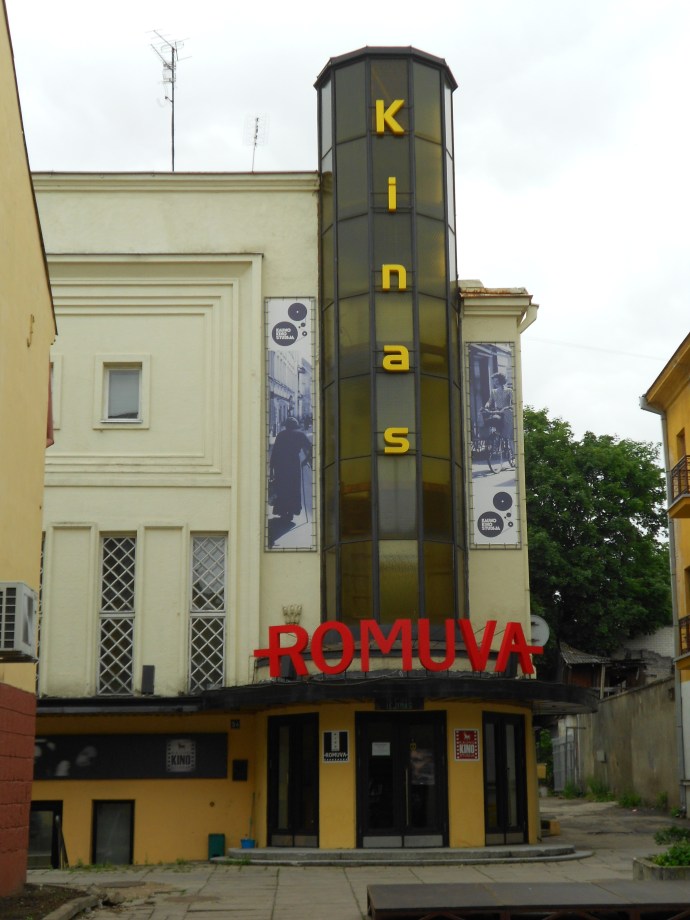
The cinema looks just like one in Poland… 25 years ago.
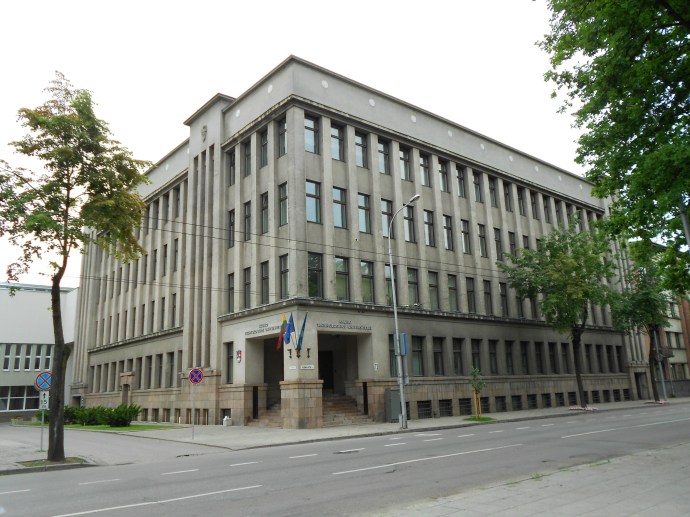
As Tautvydas told me, from this building you could see Siberia – it used to be the KGB headquarters
I admit I couldn’t wait to visit the Museum of War (The Vytautas the Great War Muesum) which, despite presenting the Lithuanian version of history, did not disappoint me. Lots of exhibits and paintings of the Grand Dukes of Lithuania and Polish Kings (images were signed in this order). There was also the wreck of the Lituanica air plane which was used by Steponas Darius and Stasys Girenas to fly across the Atlantic in 1933, unfortunately crashing some 650 km from Kaunas. These pilots are more famous in Lithuania than our Żwirko i Wigura in Poland. Unfortunately the fee for taking pictures in the Museum was several times higher than the price of the ticket (this is probably not practised in Poland anymore) so as a principle I denied and decided to focus on enjoying the exhibitions. Of course I couldn’t help myself and I criticized this on a sheet paper with suggestions for the management.

Tomb of the Unknown Soldier at the Museum of War
I also went to the former Presidential Palace where a museum is now located. The building doesn’t look very impressive from the outside but the interiors were nicely decorated.
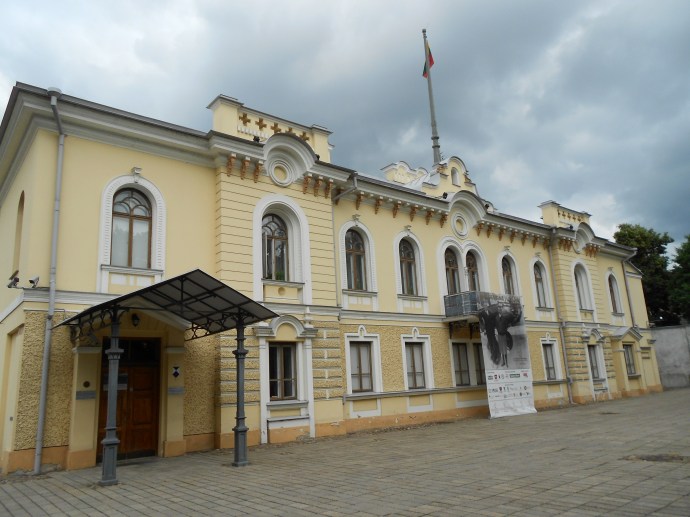
The Presidential Palace from outside
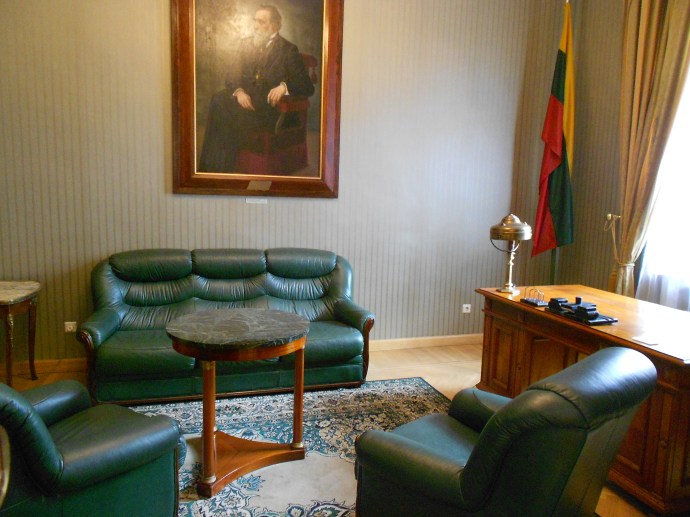
And the Palace inside
Freedom Avenue leads to the market square and on that boulevard on 15 May 1972 Romas Kalanta set himself on fire in a protest against the occupation by the USSR. I must admit that during my visit to Lithuania I learned a lot about country’s recent history, about resistance during the Second World War and during the occupation by the USSR, as well as about regaining independence in 1990. Lithuanians are ordinary people who have a strong sense of national belonging and although they are very sensitive when it’s about our common history, I had a great time. And that’s what people can learn while travelling – getting rid of prejudices and becoming more tolerant. However I got the impression that Lithuanians in the UK, at least some of the ones I met, are less tolerant than their compatriots living in Lithuania. But one can say the same about Poles…
On Saturday evening my hosts took me to a meeting with their friends who brought their guests from Couchsurfing so an informal international CS meeting with a beer took place. And except for one Upper Silesian guy who wanted to pass for a German, people were very nice.
On Sunday, I was still wandering around the city, as both hosts had to work a bit. The small market square looks good with a small but nice town hall, near which Adam Mickiewicz lived during the time when he worked in Kaunas as a teacher. I had to visit the castle, built by the Teutonic Knights at the end of the fourteenth century. And it was a very disappointing visit because, apart from the tower, there is not much left. But I witnessed the bride being carried over the bridge near the castle and I suspect that this custom is popular depending on… the weight of the bride 😉
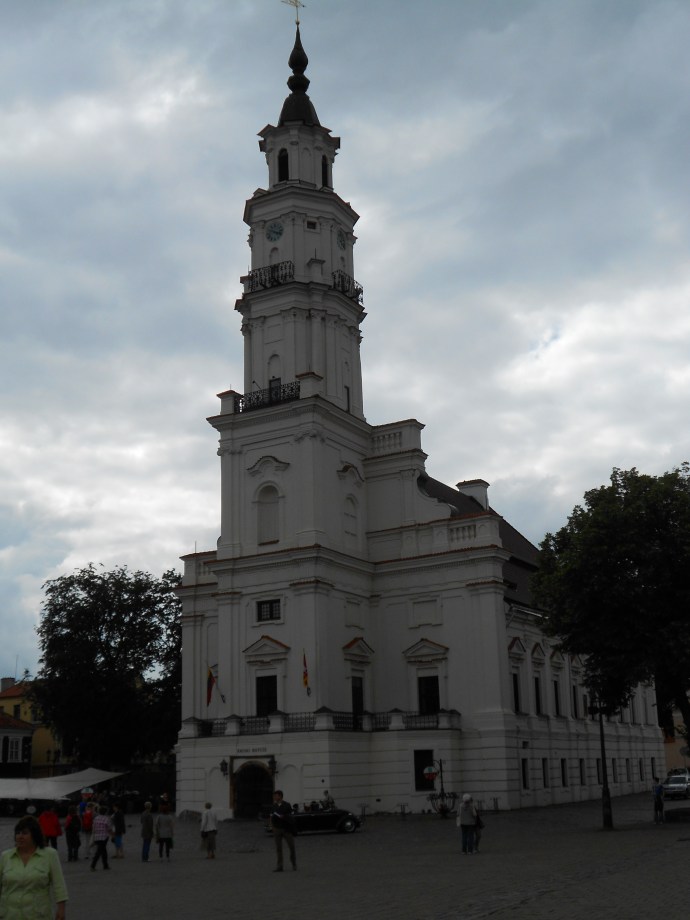
The city hall

The Kaunas “castle”

Teutonic banners captured by the Lithuanians at the Battle of Grunwald
Let me just add that around the Central Station, the smell of brewed beer rises from the Volfas Engelman brewery, which makes walking around the city very pleasant.

The brewery
After returning to Vilnius, where I again stayed with Renata from CS and after trying lovely caramel beer, I decided to visit Trakai. It’s located about an hour from Vilnius by bus.
Trakai, although tiny (about 5,500 inhabitants, of which about 21% are Polish) have a lot to offer. There are two castles, one, located on the peninsula and the other one (built by Vytautas, today beautifully reconstructed), located on a small island. The Island castle from 1408 was the main residence of the Grand Dukes of Lithuania. Along the main street in Trakai one can see the characteristic Karaim buildings. The Karaims (Crimean Karaites), brought to Lithuania by Vytautas, are of Semitic origin, with a separate religion derived from Judaism. This group has about 30,000 followers and is scattered all over the world. The main difference between Karaims and Jews is that the former reject the authority of the rabbis and the Talmud, they use the Bible and in particular the Mosaic Pentateuch. The front wall of the typical Karaim wooden hut has three windows: one for God, the other one for Vytautas and the third one for household members. The construction of the Karaim Museum (unfortunately closed when I was there) was started by the Polish state in 1938. On the peninsula there is a church founded by Grand Duke Vytautas. The St. Virgin Mary church which is famous for the image of the Mother of God of Trakai (the second image in the Commonwealth, after Our Lady of Czestochowa, crowned with papal crowns by the Pope), the Patroness of Lithuania, which annually is a place of solemn celebration in her honour. Stefan Czarniecki, King Jan Kazimierz, Jan III Sobieski prayed in front of the image of Mother of God of Trakai.

The Peninsula castle
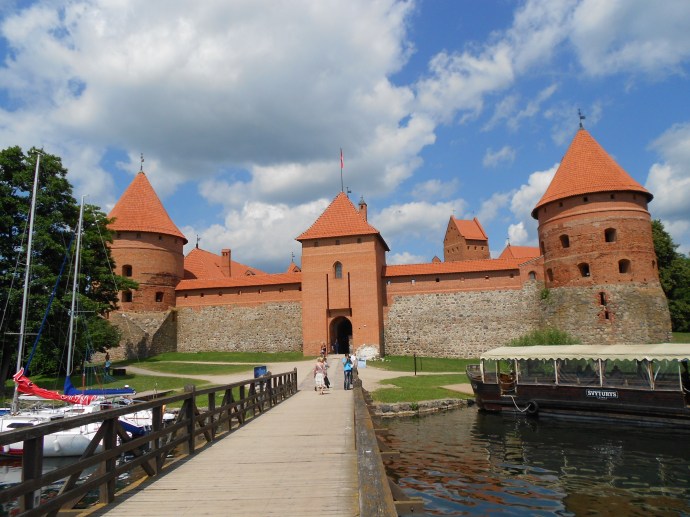
The Island castle

The keep

Inside the keep

Karaim Street in Trakai

Church of Mother of God of Trakai
And so my trip to Lithuania ended but as I mentioned, I will definitely come back to see the rest of the country.

 Polish traces around the world