So we got to Nairobi. The city has more than three million inhabitants and its name comes from a water hole called in Maasai Enkare Nairobi – a place of cool water. The city was founded relatively recently in 1899 and it was a rail station between Mombasa and Kampala. As early as 1905 it became the capital of the British protectorate and a tourist destination as people used it as a starting point for safari and hunting. After gaining independence Nairobi began to grow rapidly and is now a city of contrasts, besides the enclosed neighbourhoods like Karen we also find the second largest city slum in Africa – Kibera. But we didn’t have time to get to know the city well. We were picked up from the airport by a driver named Kwach who took us to my friend Gosia who worked in Nairobi for InterHealth, an international charity. We were taken to the charity event that was ending soon but they still served food and I never say no to free food 😉
After all we went to the Gosia’s apartment in Lavington, in a small gated complex. In the evening we went to the Ethiopian restaurant although you would never guess there was one when you were standing outside. The restaurant is surrounded by a tall wall a serious looking guard at the gate and no, it wasn’t a posh place. This is the sad reality that the rich have to be separated by high walls from the rest of society… This was my first time at an Ethiopian restaurant and I must say that injera, Ethiopian bread from a fermented, acidic dough will not be my favorite. As Ethiopian food is usually served on this bread, it spoiled the whole culinary experience for me but we had time to catch up with Gosia and that was the main reason for our visit. The next day Gosia went to work and we went with Kwach to explore tourist attractions.
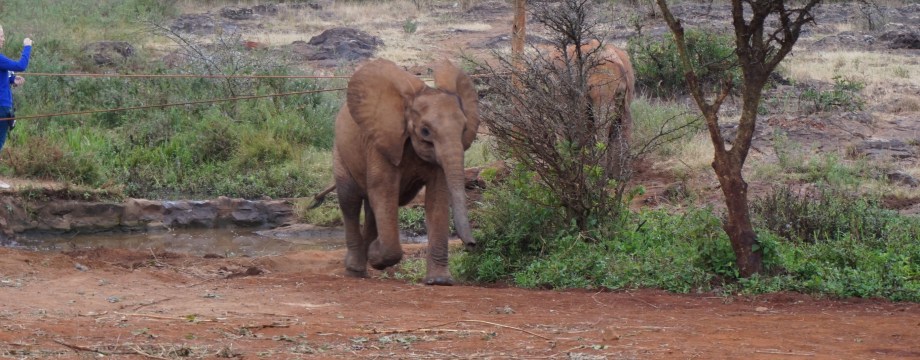
We started with the David Sheldrick Elephant and Rhino Orphanage. The trust was founded in 1977 by David Sheldrick’s widow, Dame (given the MBE title by the queen) Daphne Sheldrick. She was the first to develop a milk formula for young elephants and rhinoceros and a method of caring for them. Most of the orphaned elephants come to the centre when their mothers fall prey to poachers. After growing a bit the young elephants are released into Tsavo National Park where they join the wild elephants. Since the beginning, the centre managed to release about 150 elephants. The centre can be visited between 11 and 12 when the youngsters are fed and take a mud bath. You pay a few pennies for admission but the money goes to a good cause. And how much joy it is to watch the elephants!
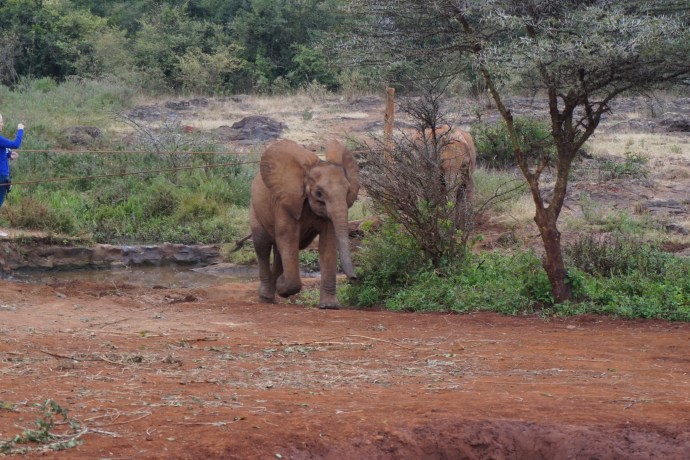
“Did anyone say food?” The elephants trotting toward the caretakers
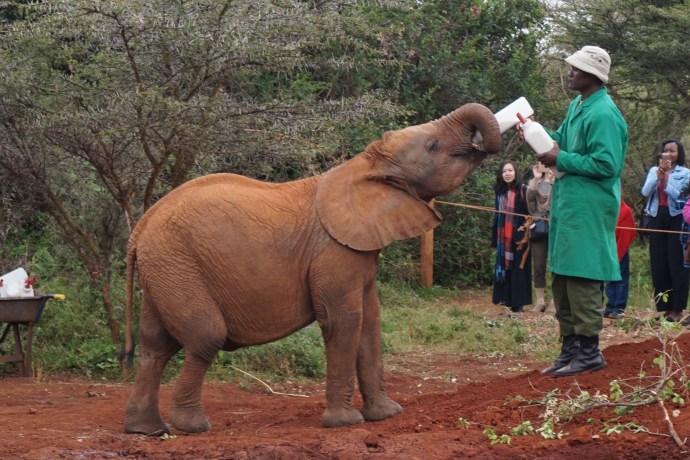
Food!! Yummy!!!
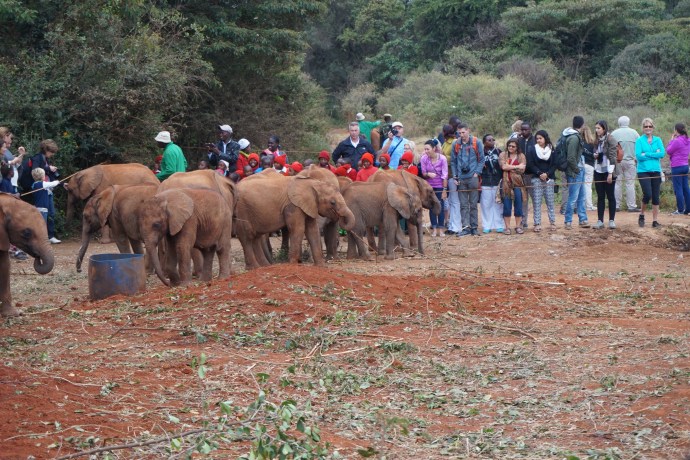
After the milk it’s time to bite some twigs
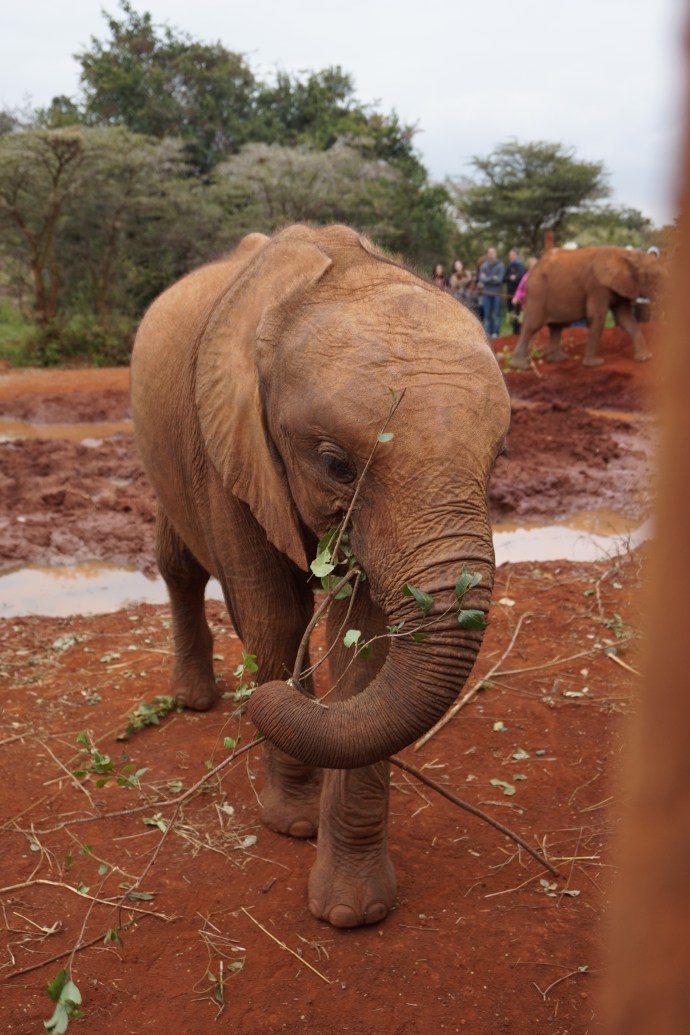
I was able to pet the baby one – he was warm and hairy 🙂
After the elephants we went to see the giraffes. We went to the Giraffe Centre, the mission of which is protection and sharing the knowledge of Rothschild giraffes. The centre was founded in 1979 by Jock and Betty Leslie-Melville. Saddened by the difficult situation of this giraffe species they decided to help. The main addressees of the Centre are Kenyan children and school youth. At the centre you can listen to the mini-lecture, go for a small trek and watch the birds or feed the giraffes. Of course we ran to the feeding platform, grabbed a handful of special giraffe snacks and started feeding them.
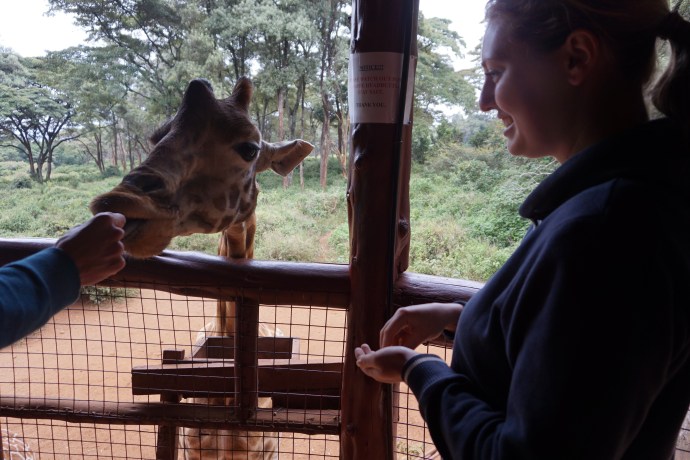
The giraffes literally ate from Matilda’s hand
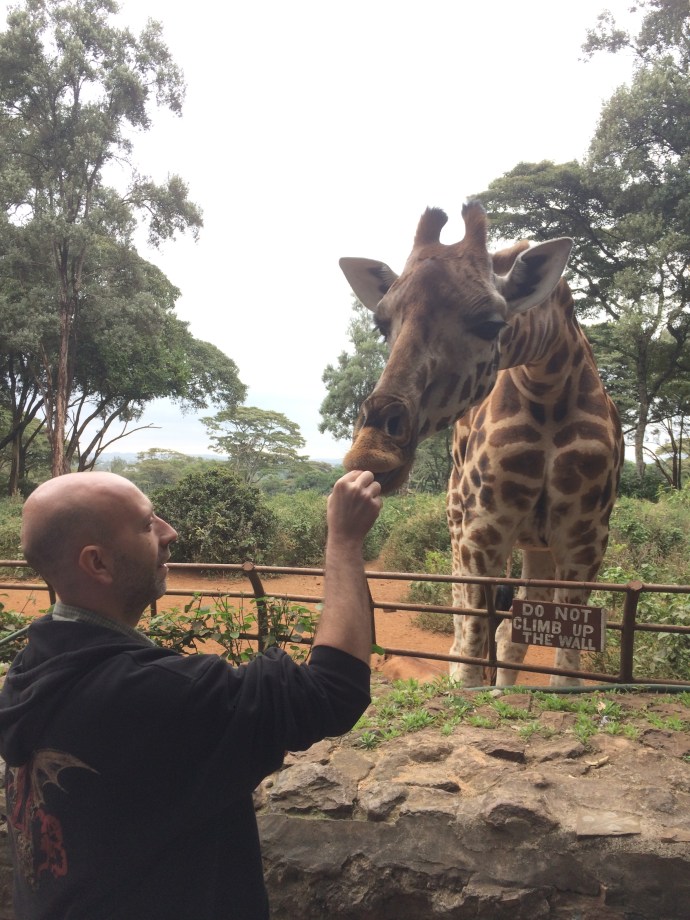
And from mine too!
Admission costs about $ 10 and these are needed at the Centre. Getting there may be difficult but there are several attractions in the area so maybe renting a car with a driver or a taxi is not a bad idea. Remember to haggle!
Time for the third attraction – Karen Blixen Museum! The museum is located in the old house of Karen. The neighbourhood around the museum is called Karen and was named after Baroness Blixen. When we drove through the neighbourhood we noticed a lot of large mansions of course with tall walls. A farm of about 6,000 acres was purchased by Bror Blixen in 1913. Here on 600 acres the spouses continued to grow coffee, which was started by the former owner, Swede Åke Sjögrenunder under the name Swedo-African Coffee Company. The new company was under the name Karen Coffee Company (a company named after Baroness’ Cousin, whose father was the company’s main shareholder). Karen’s husband quickly got bored with working as a farmer and with monogamy. After separation the had come for divorce (1925). Before the separation the Baroness met Denys Finch Hatton, a big game hunter (handsome Robert Redford in the film;)) and their friendship developed into a romance. Between 1926 and 1931 Denys used her home as his base. Then the economic crisis came, coffee prices fell and Karen had to sell everything she had. In 1931 Denys and his servant died after his plane crashed. The same year Karen returned to Denmark where she continued writing. In 1934 she published as Isak Dinesen the “Seven Gothic Stories” and in 1937 “Out of Africa”. She continued as a writer until her death in 1962. Several of her works were published posthumously. A few times Karen Blixen had been considered for the Nobel Prize in Literature.
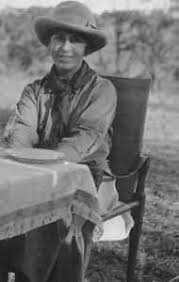
This is my favourite photo of Karen, taken around 1918 on safari
But let’s go back to the museum. The building was purchased by the Danish government in 1964 and given to Kenyan government as an independence gift. There was a college of nutrition there. When “Out of Africa” was filmed in 1985 there it was decided to open a museum there. Some of the original furniture was recovered, the museum was supplemented with exhibits used in the film and in 1986 the museum was opened for the public. The museum is open daily, you visit it with guides, whose knowledge is impressive. You can also buy souvenirs and handicrafts in the shop. Photos can’t be taken inside but you can snap photos of a house or agricultural equipment around the house. I was surprised by how impressed I was by the visit to the museum – I love the film and the soundtrack, I read the book but I did not expect such a reaction.
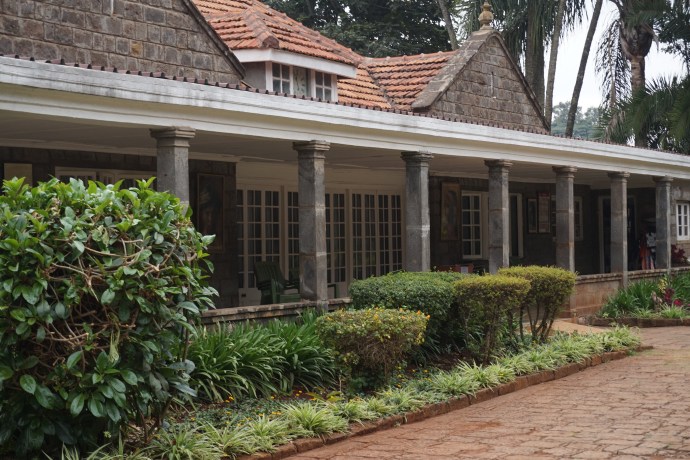
Front of the house
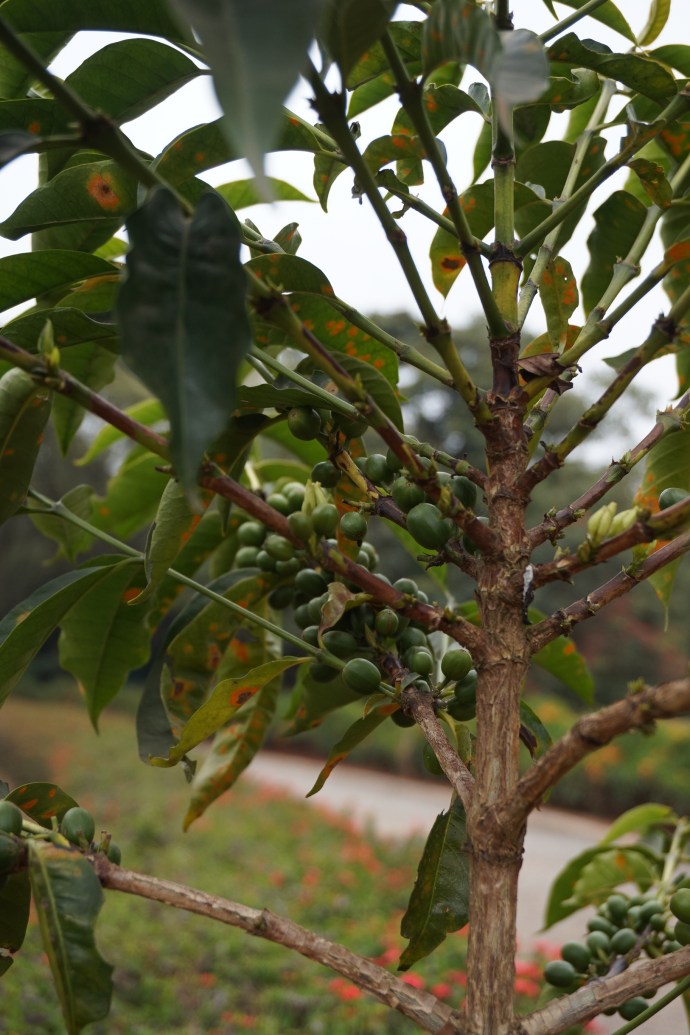
Not much left from the coffee plantation – only a few Coffea arabica trees
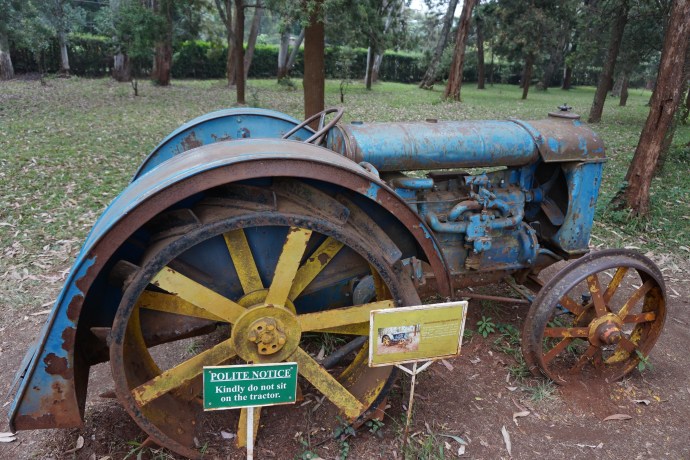
Karen’s tractor
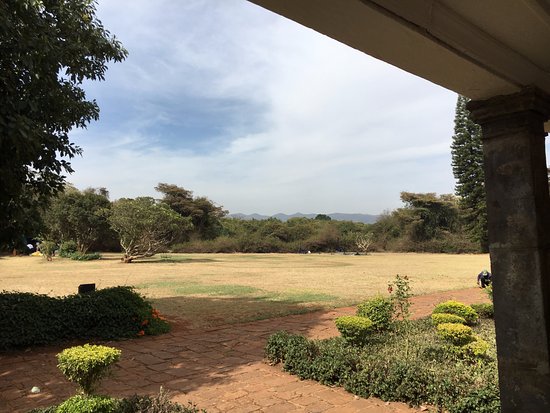
“I had a farm in Africa, at the foot of the Ngong Hills”.
I didn’t want to leave this place, but if I ever come to Nairobi again I will definitely visit the museum. Our driver, Kwach, started talking about a bead factory. I said that I won’t go to see any beads. That’s how we arrived in the Kazuri bead factory. We were shown around, everything was nicely explained and I no longer regretted that we were “kidnapped” to this place. Kazuri means “small and beautiful” in Swahili and the factory was founded by Susan Wood in 1975 and initially employed two disadvantaged women. Susan soon realized that there were more women such as lone mothers, victims of domestic violence and as the business grew, Susan employed more women. In 1988, there were 120 men and women working there, using clay mined from Mount Kenya. Today there are more than 300 people working at the factory, there’s a clinic that employees and their families can use and the products are sold in more than 20 countries. During the visit we came across a prayer, attended by all the workers and were also invited.
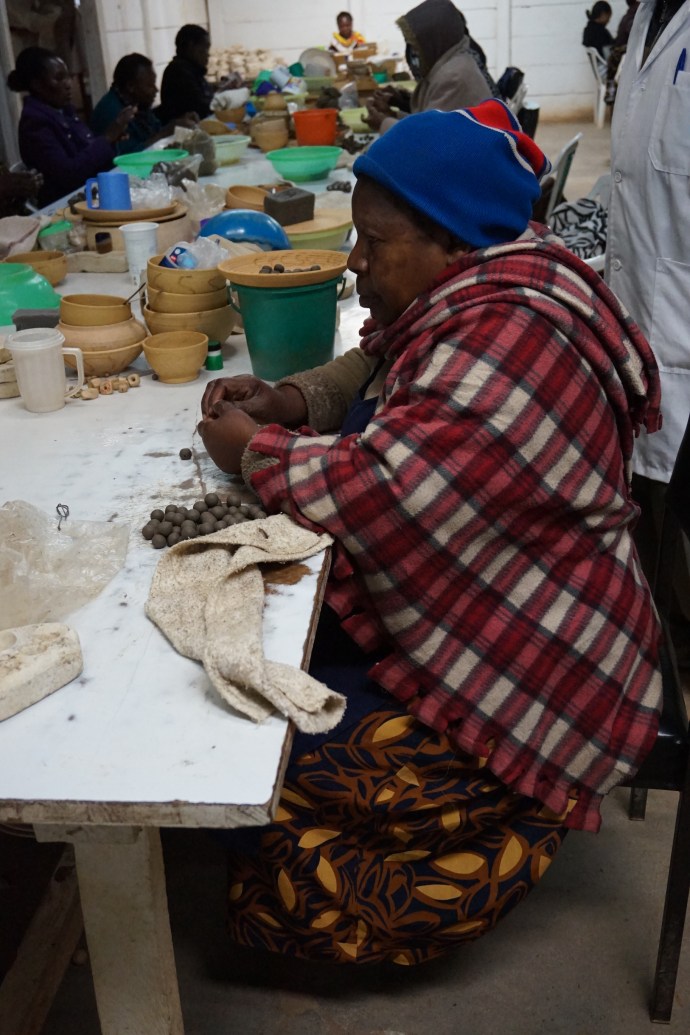
One of the first ladies employed at the factory
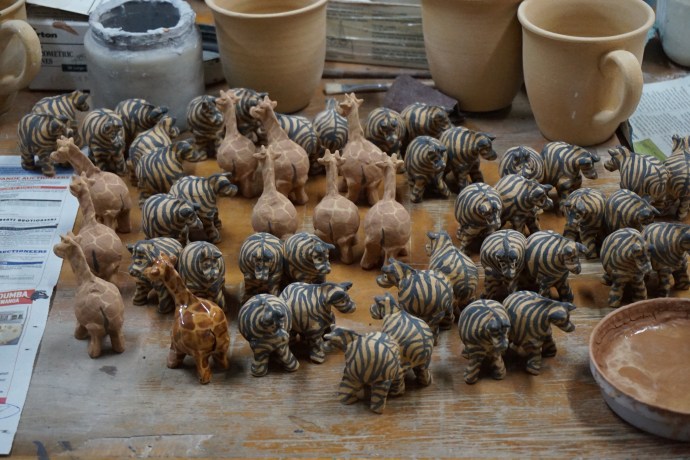
They don’t only make beads there 🙂
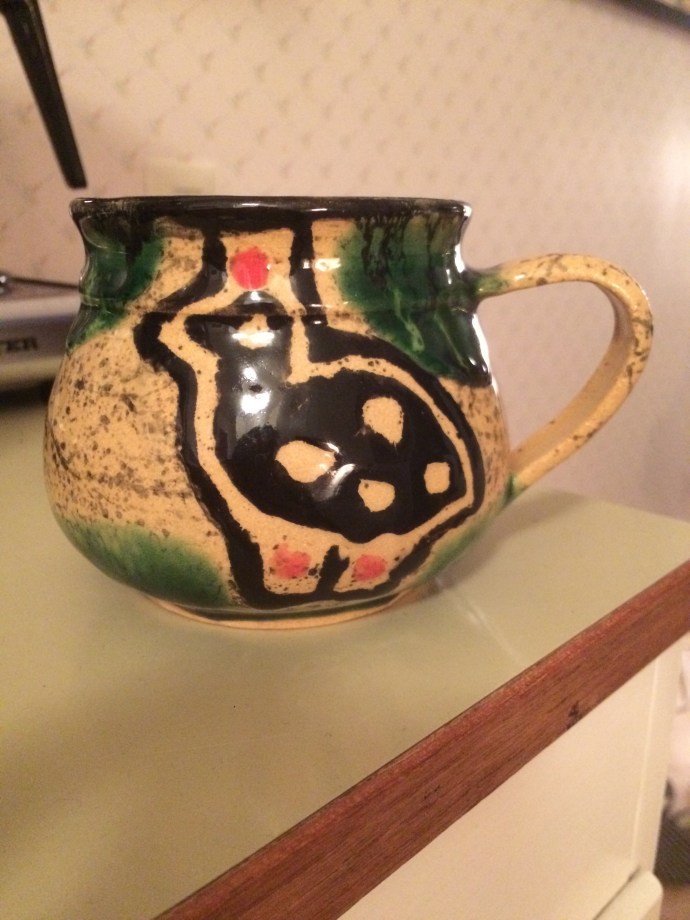
And I’ve been enjoying my Kazuri coffee mug for over a year now
The factory is a Fair Trade which in simple words puts people above the profit. This visit made me think because even though I know how good Fair Trade has been for small coffee farmers, I’ve never seen such an operation with my own eyes.
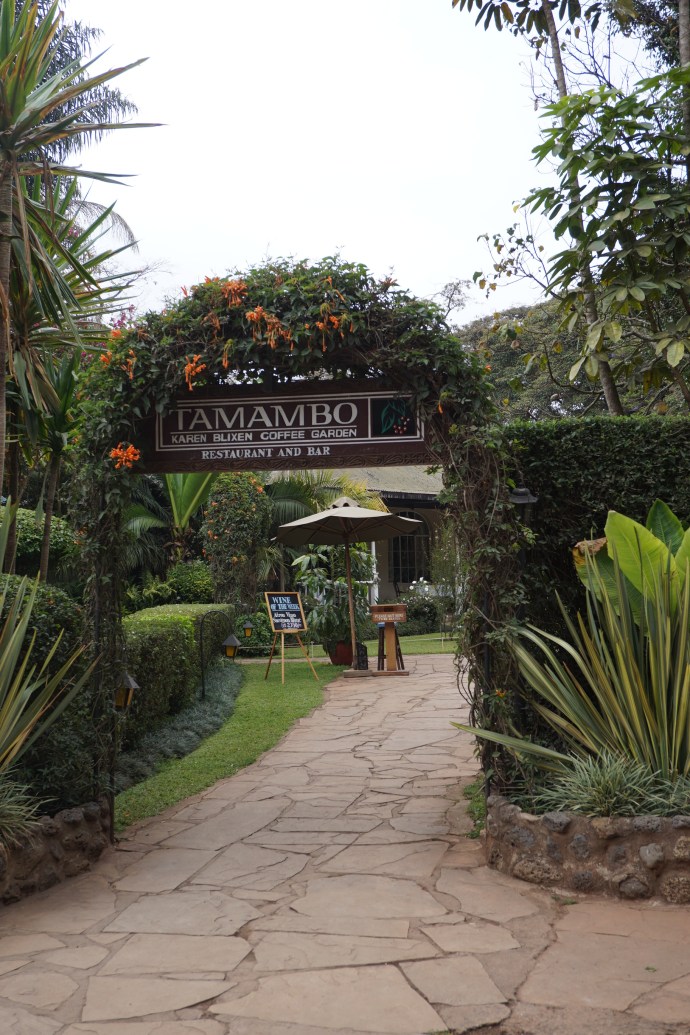
After a busy day, we went for a well-deserved light meal at the Karen Blixen Coffee Garden, which is housed in a former hunting lodge.
We spent the evening with Gosia and it was our last day in Africa. In the morning Kwach picke us up (late as usual;)) and we drove to the airport. Close to the airport we saw a zebra standing next to the road, quite surprising, considering how big the city is. The checking in luggage system at Jomo Kenyatta International Airport (named after the first president of independent Kenya) is… strange. All luggage is scanned practically at the entrance to the terminal which results in a huge queue outside the building. This is probably because of the terrorist threat but if I had a bomb I would use it outside the terminal because we all stood there, squeezed like sardines. We were sure we would be late for the flight because the queue was moving very slowly. We passed the passport control after the departure time. The plane was delayed by two hours but we probably took all people on board. We travelled to Gothenburg via Istanbul for Matilda’s cousin’s wedding. Pole, pole, hakuna matata!

 Polish traces around the world