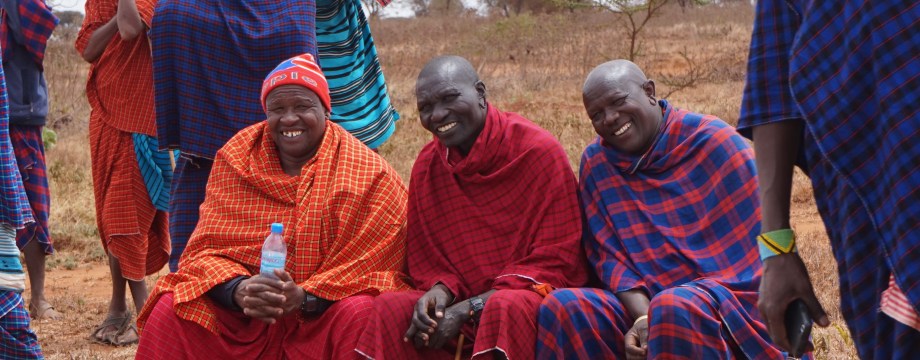
The final point of the program before returning to Arusha was the closing ceremony of the project. Unfortunately on the same day a funeral happened with a large number of people attending but a lot of people came to our “party” anyway, including the Elders and the local politician. The ceremony was held near a tree thought by the Maasai as sacred. This is a fig variety (ficus natalensis), called locally mutuba (interesting fact for those who read Tomek’s books – from this tree bark is obtained, from which fabric (bark cloth) is made, traditionally worn by members of the Baganda tribe and often featuring King of Buganda – kabaka. Tomek Wilmowski with friends visited kabaka Dausi Chwa II. I couldn’t help myself 😉)
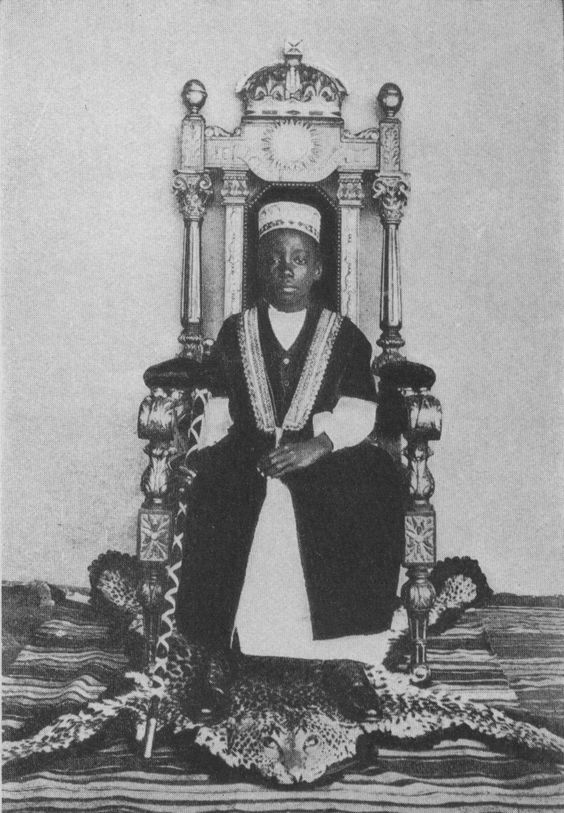
And that’s how kabaka looked like, roughly at the time when Tomek visited Buganda
Under this tree barren Maasai women pray. With the consent of the Council of Elders, the tree (called Oreteti le-Emboreet) was converted by children and youth in 2006 into the Childrens’ Meeting Place.

Oreteti le-Emboreet
Each of us got a chair and sat down with the politician and the Maasai leaders. This time we had a very good translator who translated from English to Swahili, sometimes adding something in the Maasai language. As I mentioned earlier, the Maasai people love speeches. It started with a politician who thanked for the project and quickly began to express the needs of the people in his constituency. After his speech we heard short speeches of traditional leaders and finally came our turn. So far I have always had my speech at the end but the translator said that since I am the only man in the group, I should start. The invitation to the speech caught me a little unprepared, but I had to quickly get a grip.

My Swedish companions listen diligently to the speech, and I run around with the camera, almost like Tony Halik 😉
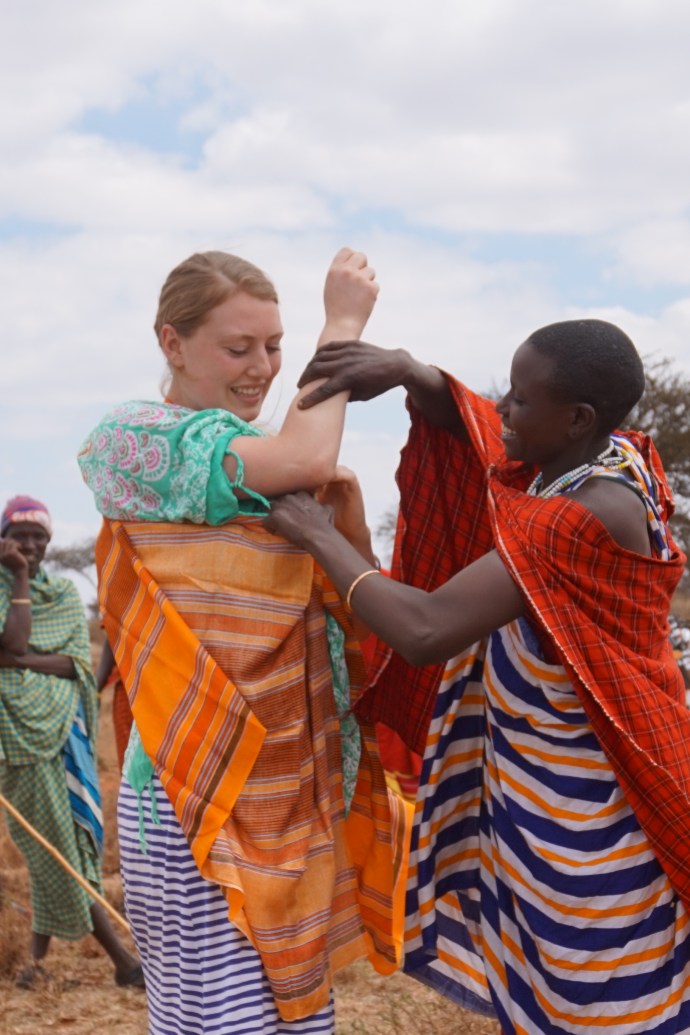
There’s no official meeting without presents
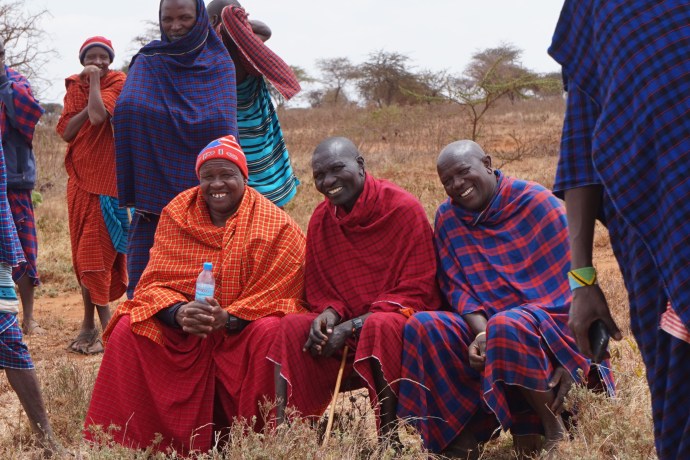
Everyone in good mood – this is one of my favourite photos from Africa
Usually the speech is short, but as it was a big day, I decided to “go crazy”. I think no one expected much after my speech, because what can I say? I started with the fact that it was my first time among the Maasai but that I will definitely come back and that they all made me feel very comfortable there. I added that I noticed that the needs of people living there were large and that I would like to help them somehow. Then I told them about Poland, an exotic country for them but a country that owed a lot to them. I told them how 70 years ago thousands of Polish women and children came to the Maasai land, that staying here was a real paradise for them compared to what they experienced in Siberia and on the way to Africa, I told them about Tengeru and other camps, as well as the thousands of children and grandchildren of those exiles who live all over the world and who will forever be grateful that their families had had a peaceful haven even if it was for only a few years. Of course, the Poles were under British protection but there are many positive thoughts about the local population in memoirs, and local people also had different attitude to our countrymen than to the British. I said that I was working with the Kresy-Siberia organization and that I would tell the members that as our fathers and grandparents needed help a few decades ago, now the Maasai need help. Since I have no power nor money I could not promise anything to the listeners but for what I said I received almost a standing ovation. I guess I was the most surprised one, because those few days in Africa were such a huge load of positive energy for me that speaking from the bottom of my heart I was able to move the hearts of others…

I often had the impression that the translator was adding a lot. Later during a meal, he admitted that he had to explain things in more detail, especially about Poland but since he had visited Tengeru and heard about Polish refugees, it was easier for him.
After my piece-of-art speech Swedish women spoke but I have to say that their speeches did not make as big impression as mine 😀
After the ceremony we went to a nearby boma for a meal and I had the chance to try a slow-roasted goat, a local delicacy. I admit that the meat was quite tasty although I was more focused on chasing off dozens of flies and talking to a translator. Well until I noticed that the warriors used their 50-60 centimeters long knives to cut pieces of meat off the bone – it’s very impressive and requires a lot of practice – I know because of course I had to try it when no one looked 🙂
And so our visit to Simanjiro came to an end. The next day we went back to Arusha, from where my dear Swedish ladies went to Dar es Salaam and we had booked a bus to Mombasa. But it’s Africa, nothing ever goes as planned but I’ll tell you all about it pretty soon 😉

And the last family picture

 Polish traces around the world