The day after my wanderings in Vilnius, I decided to go to the Rasos cemetery, where is buried the urn containing the heart of the Marshal Pilsudski (Marshal’s tomb is located on Wawel Hill, about which I wrote here). I walked so slow that pensioners were overtaking me, but I gritted my teeth and at the snail’s pace got to the cemetery. The urn is buried in a common grave with Marshal’s mother, Mary née Billevich Piłsudska. On the grave it’s written only MOTHER AND SON’S HEART and two quotations from Slovacki. The mausoleum is placed in the middle of a small Polish military cemetery, where are buried the soldiers killed in the 1919, 1920, 1939 and 1944. Marshal ‘s wish was that his heart was buried among his soldiers. Military Cemetery is well presented, although on some tombstones names were barely legible. Some of the tombstones are damaged by bullets, but I could not figure out whether this occurred in the course of Operation ” Ostra Brama ” in July 1944 ( the liberation of Vilnius by the Home Army and according to plan “Tempest”, welcoming Russians as the host ).

Mausoleum with heart of Marshal Pilsudski

Soldiers’ graves. One can clearly see damaged gravestones
The Rasos cemetery looks a little worse, a lot of tombstones is neglected and one has to blaze a new path to reach them, but do not forget that this is a very old cemetery, it was founded in 1769. And walking through the cemeteries is my little “thing”, I like to read the names on the tombstones, find out how many years they lived, what they were doing. Of the most famous characters in the cemetery lie, inter alia, Joachim Lelewel (historian, Adam Mickiewicz’s teacher), Rafał Radziwiłłowicz (doctor, psychiatrist, brother of Stefan Zeromski and prototype of Dr. Judym from “Homeless people”), Adam Pilsudski (Marshal’s brother, Senator, Vice President of Vilnius ), Anthony Wiwulski (architect, sculptor, author of the Grunwald Monument in Kraków and the Three Crosses in Vilnius), Maria Piłsudska (the first wife of the Marshal), Eusebius Slovacki ( Julius Slovacki’s father) and many professors and lecturers of the Stefan Batory University (founded in 1579) and other prominent Poles and Lithuanians.
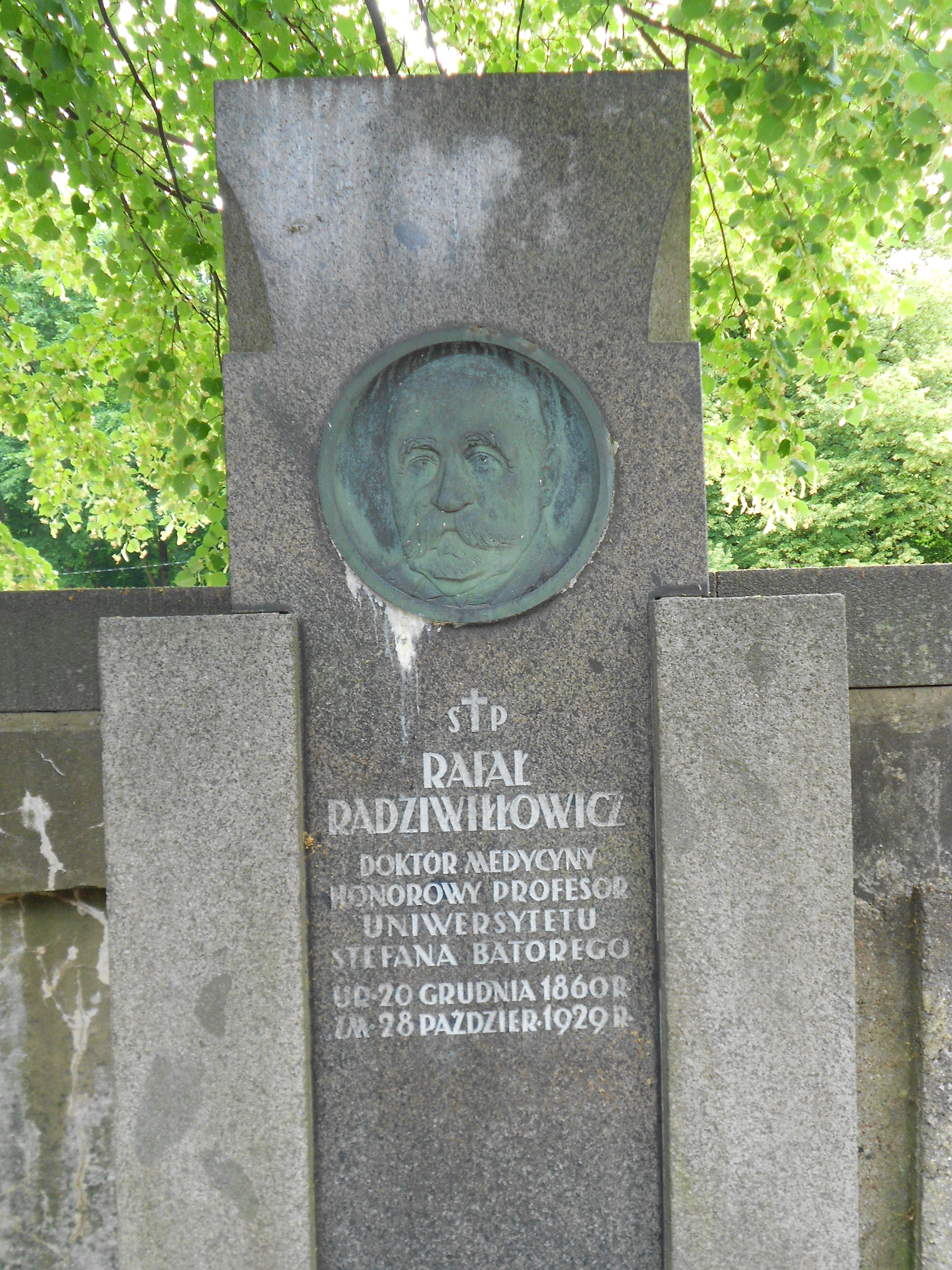
“Dr Judym’s” gravestone
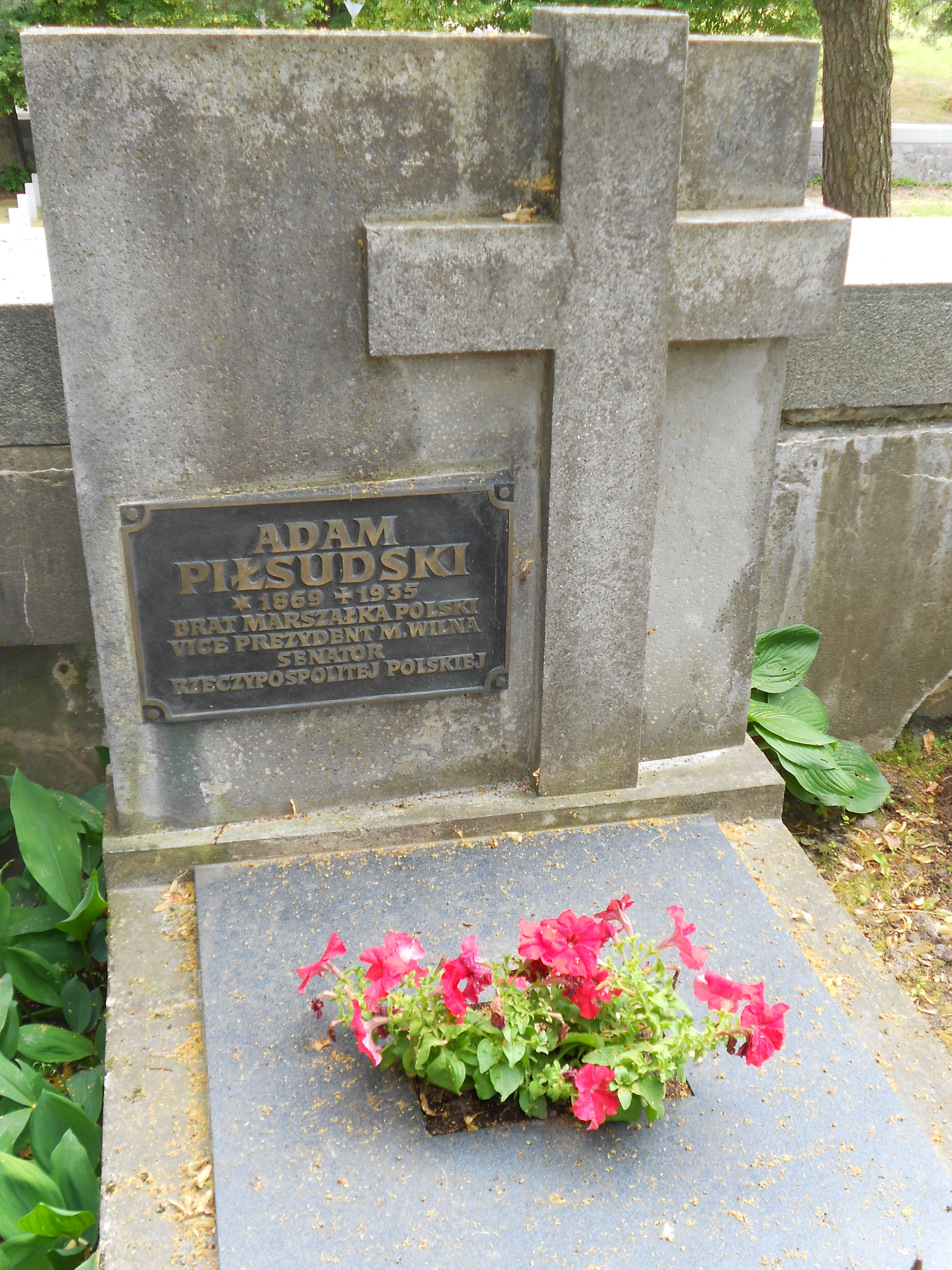
Adam Pilsudski’s gravestone

Joachim Lelewel’s gravestone

Black Angel from Rasos cemetery
After returning from Kaunas (post coming soon), I went to the Bernardine Cemetery in Vilnius. This cemetery looks much better than Rasos and mostly thanks to the late Andrew Przewoźnik, who was the Secretary General of the Council for the Protection of Memory of Combat and Martyrdom. More than 150 gravestones have been restored by the Council.
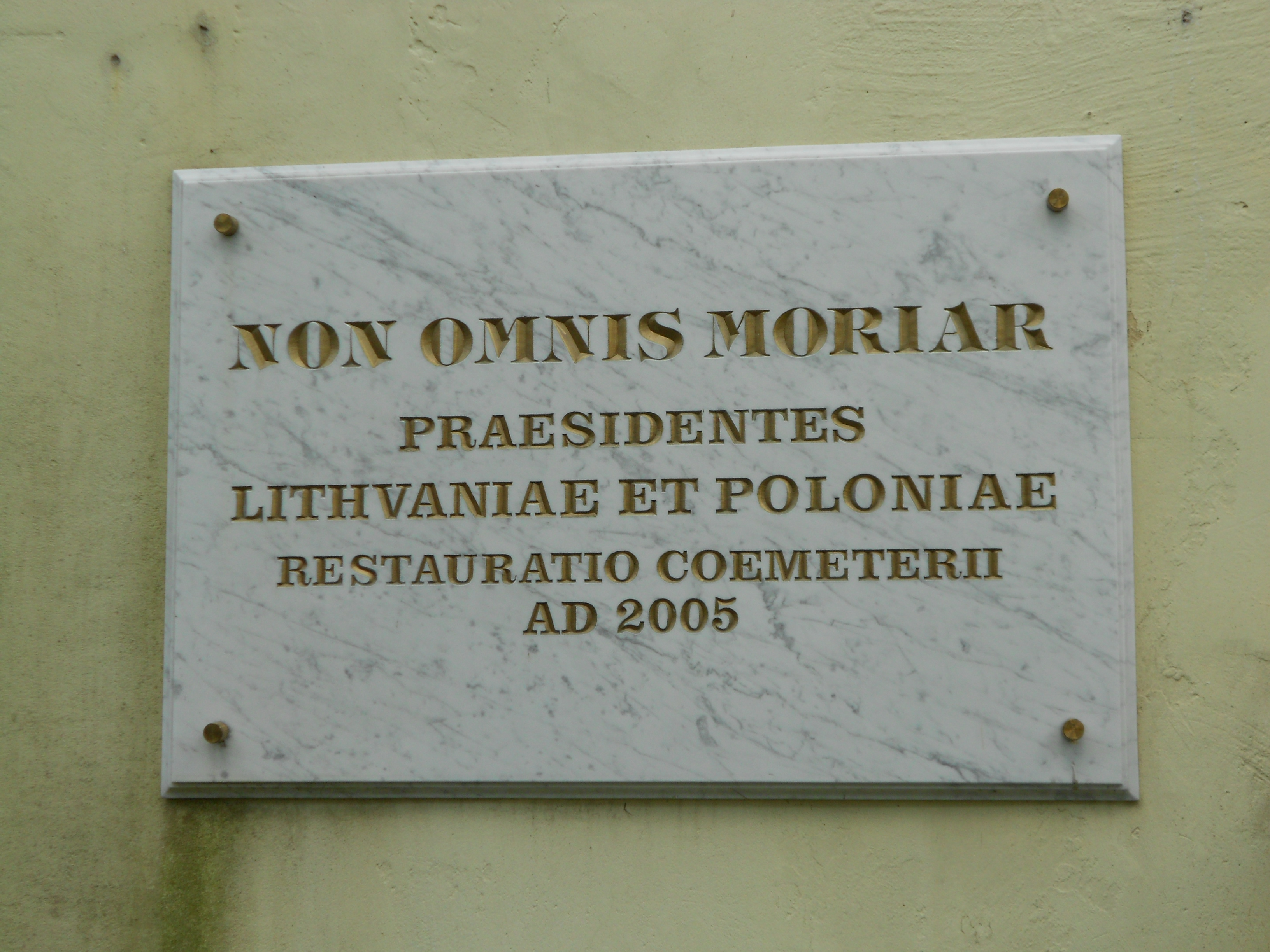
Plaque at the entrance to the Bernardine Cemetery
This cemetery is not as old as Rasos, it was founded in 1810. Many outstanding Polish and Lithuanian scientists and artists rest there, you can also find the graves of insurgents from 1863 and soldiers from 1919. It was a really strange feeling, strolling among the Polish graves in a city that is not Polish anymore. But don’t worry, I will not call to get Vilnius back 🙂

Soldiers’ graves from 1919
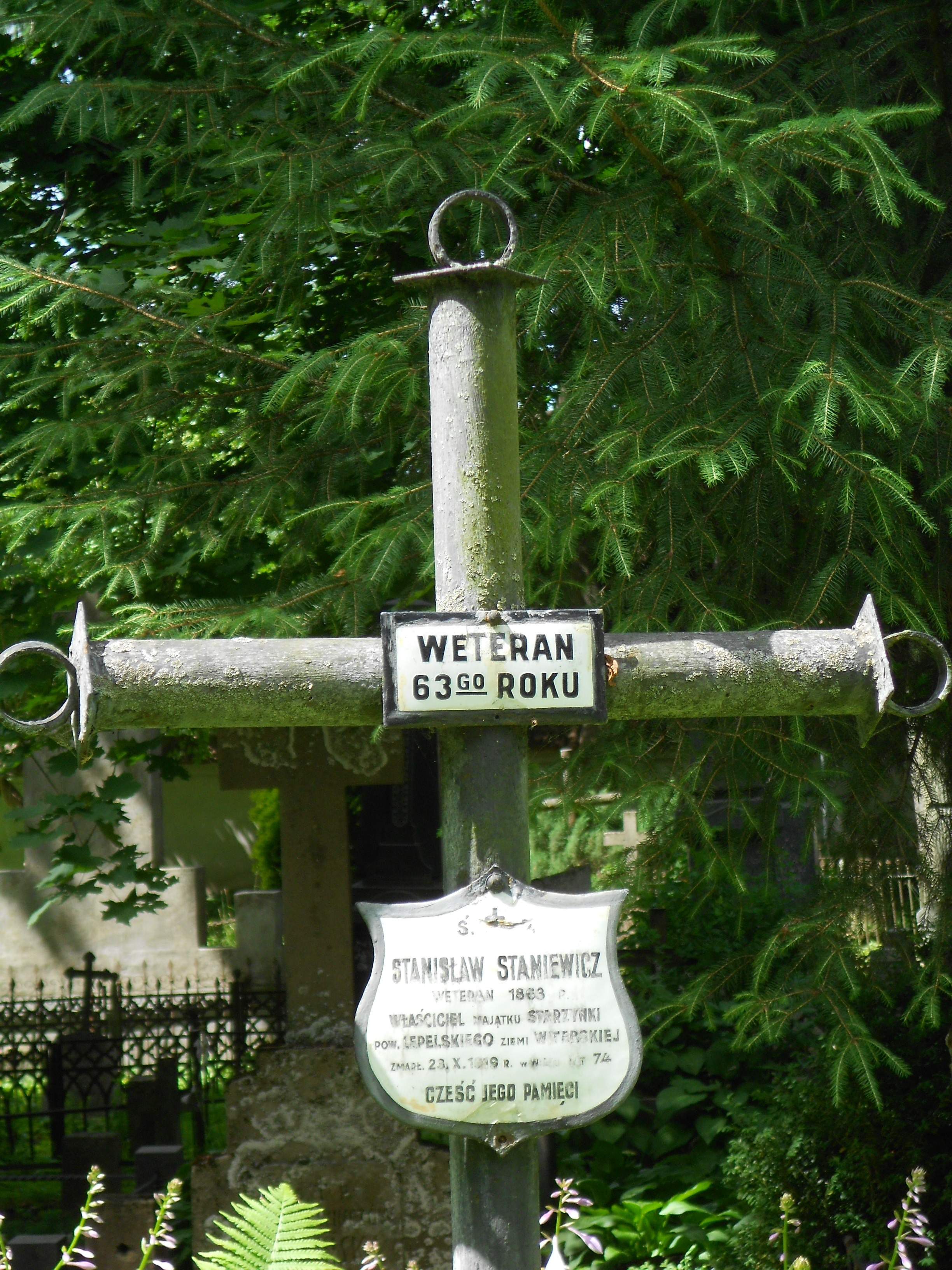
Tomb of insurgent from the January Uprising
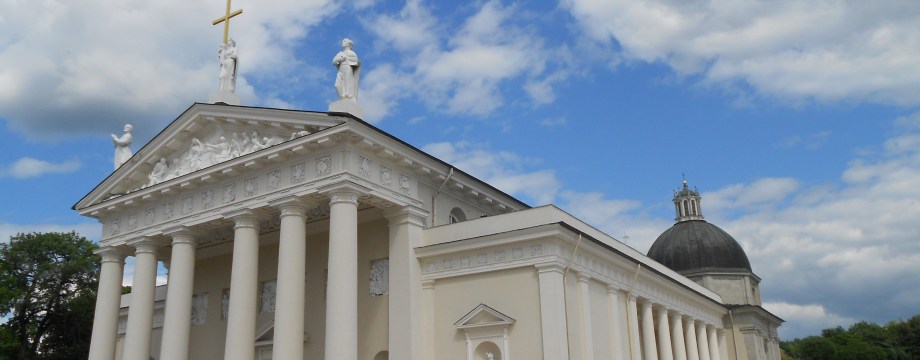
After a visit to the cemetery, I decided to complete the list of monuments and walked to the Cathedral of Vilnius (dedicated to Saints Stanislaus and Ladislaus), the burial place of the Grand Dukes of Lithuania and the Polish kings at the same time. The cathedral makes a beautiful impression from the outside, but inside it seemed a little harsh, but that’s my opinion. The first temple on the site was probably built in the second half of the thirteenth century.

The cathedral

Cathedral’s interior
After the cathedral I went to the Polish church (Holy Ghost’s) for a second. From the outside, the church seems to be squeezed between the buildings, but inside it looks really nice. But the assessment of both churches I leave to you, my dear readers.

Inside the Holy Ghost’s church

One of the plaques hanging in the church commemorating Home Army’s soldiers

 Polish traces around the world
Greatstuff – hoping you could help with an ancestry research request. Did you notice or perhaps have any documentation or photographs of graves from the family Mikulski. Also, if you have anything on Szumsk and Kosina Mala. Welcome anything you can share.
I shall check a few things after the weekend, been swamped.